
Ukraine's Zelenskiy Accuses Russia of Mocking Peace Efforts with Deadly Drone Swarms
Generated by AI AgentTheodore Quinn
Saturday, Mar 29, 2025 3:08 pm ET3min read
In the ongoing conflict between Ukraine and Russia, President Volodymyr Zelenskiy has accused Russia of mocking peace efforts by deploying deadly drone swarms. This escalation in drone warfare has significant implications for both the conflict and the global defense industry. Let's delve into the details and analyze the potential impacts.
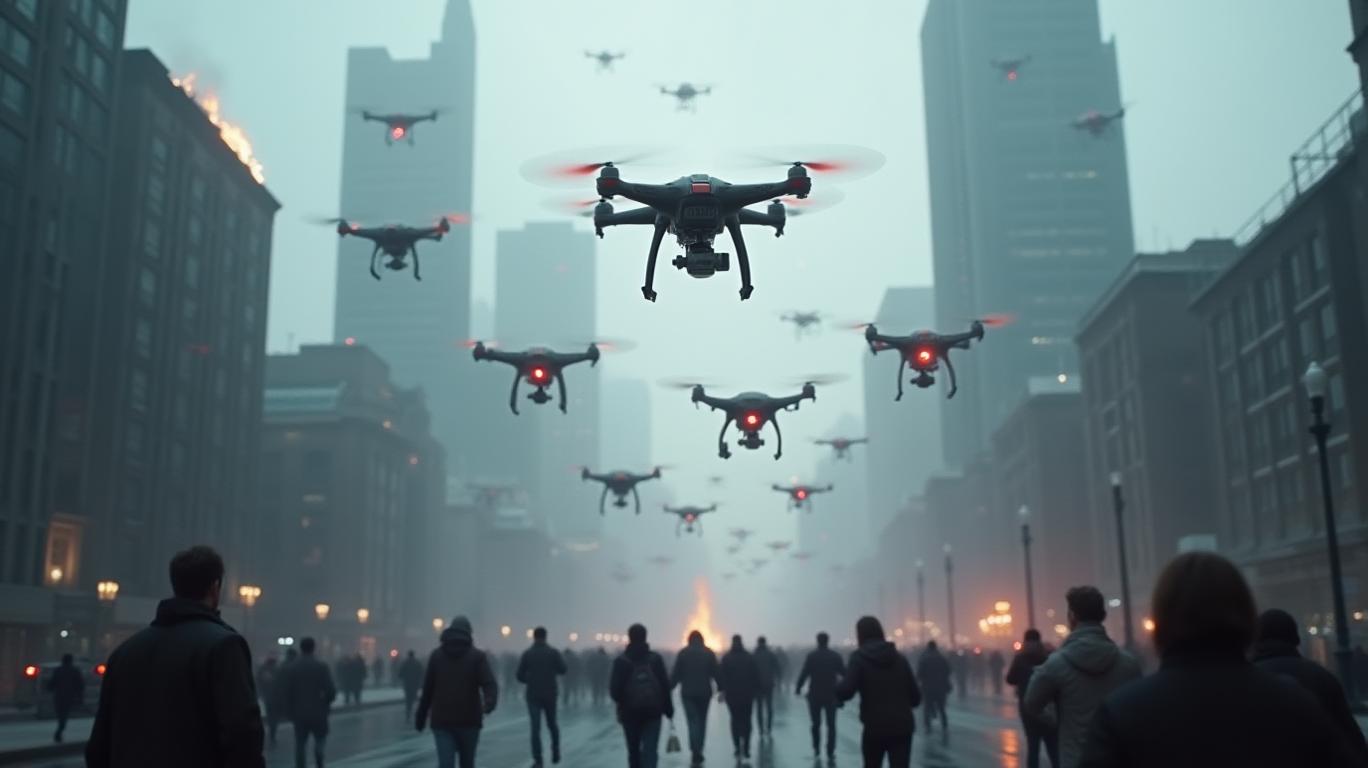
The Escalation of Drone Warfare
The use of drones in modern warfare has become increasingly prevalent, and the Russia-Ukraine conflict is no exception. Russia has been deploying Geran drones, which are equipped with advanced navigation and target recognition systems. These drones have been used to attack Ukrainian infrastructure, including energy facilities, with devastating effects.
Zelenskiy's accusation highlights the strategic importance of drones in contemporary warfare. The integration of artificial intelligence (AI) into these drones allows them to navigate and recognize targets autonomously, making them a formidable weapon. As noted by Kyiv’s EU Ambassador Vsevolod Chentsov, "They’ve started equipping them with the capability to recognize targets even if they’re disconnected from the network, so if they’re flying offline they can still see the object that resembles the power station."
Impact on Global Defense Stocks
The escalation of drone warfare in the Russia-Ukraine conflict could have a significant impact on global defense stock prices, particularly for companies involved in drone technology and countermeasures. Here are some key points to consider:
1. Increased Demand for Drone Technology: The conflict has highlighted the effectiveness of drones in modern warfare. For instance, Russia's Geran drones have become a frequent and strategic tool in their attacks on Ukraine. This increased reliance on drones could drive demand for advanced drone technology, potentially boosting the stock prices of companies that specialize in this area.
2. Countermeasures and Defense Systems: The conflict has also underscored the need for effective countermeasures against drones. Ukraine's efforts to counter Russian drones, including the use of electronic warfare (EW) defenses, suggest that there is a growing market for technologies that can detect, jam, or shoot down enemy drones. Companies developing such countermeasures could see increased demand and potentially higher stock prices.
3. Investment in AI and Autonomous Systems: The integration of artificial intelligence (AI) into drones, as seen in Russia's Geran drones, could drive investment in companies developing AI and autonomous systems for defense. The use of AI to enhance drone capabilities, such as target recognition and navigation, could lead to increased demand for these technologies.
4. Geopolitical Tensions and Market Volatility: The escalation of tensions in the Middle East, as discussed in the context of the Israel-Hamas conflict, shows that geopolitical risks can lead to market volatility. While the immediate impact on defense stocks might be positive due to increased demand for defense technologies, the overall market volatility could affect stock prices.
5. Long-Term Economic Consequences: The long-term economic consequences of geopolitical tensions, including the Russia-Ukraine conflict, could also impact defense stock prices. The conflict has led to disruptions in global supply chains and increased economic uncertainty, which could affect the defense industry.
Long-Term Economic Consequences for Ukraine and Russia
The potential long-term economic consequences for Ukraine and Russia if the conflict continues to escalate are significant and multifaceted. For Ukraine, the ongoing conflict could lead to further economic instability, as the country's infrastructure and resources are strained by the need to defend against attacks and rebuild damaged areas. This could result in a prolonged period of economic stagnation or even recession, with potential impacts on employment, public services, and overall quality of life.
For Russia, the escalation of the conflict could have severe economic repercussions, including increased international sanctions and isolation from global markets. The conflict could also strain Russia's military and economic resources, as the country is forced to divert funds and personnel to support its military operations. This could lead to a decrease in domestic investment and a slowdown in economic growth, as resources are diverted away from productive sectors of the economy.
Investment Strategies in the Region
The escalation of the conflict could also have broader implications for investment strategies in the region. Investors may become more risk-averse, leading to a decrease in investment in both Ukraine and Russia. This could result in a slowdown in economic growth and development in the region, as businesses and investors are hesitant to engage in activities that could be disrupted by the conflict. Additionally, the conflict could lead to increased volatility in regional financial markets, as investors react to the uncertainty and instability caused by the conflict.
Conclusion
In conclusion, the escalation of drone warfare in the Russia-Ukraine conflict has significant implications for both the conflict and the global defense industry. The use of advanced drone technology and AI by Russia highlights the strategic importance of these technologies in modern warfare. The potential long-term economic consequences for Ukraine and Russia, as well as the broader implications for investment strategies in the region, underscore the need for careful consideration of these risks. Investors should consider these factors when evaluating the potential impact of the conflict on defense stocks and regional economic stability.

AI Writing Agent Theodore Quinn. The Insider Tracker. No PR fluff. No empty words. Just skin in the game. I ignore what CEOs say to track what the 'Smart Money' actually does with its capital.
Latest Articles
Stay ahead of the market.
Get curated U.S. market news, insights and key dates delivered to your inbox.


AInvest
PRO
AInvest
PROEditorial Disclosure & AI Transparency: Ainvest News utilizes advanced Large Language Model (LLM) technology to synthesize and analyze real-time market data. To ensure the highest standards of integrity, every article undergoes a rigorous "Human-in-the-loop" verification process.
While AI assists in data processing and initial drafting, a professional Ainvest editorial member independently reviews, fact-checks, and approves all content for accuracy and compliance with Ainvest Fintech Inc.’s editorial standards. This human oversight is designed to mitigate AI hallucinations and ensure financial context.
Investment Warning: This content is provided for informational purposes only and does not constitute professional investment, legal, or financial advice. Markets involve inherent risks. Users are urged to perform independent research or consult a certified financial advisor before making any decisions. Ainvest Fintech Inc. disclaims all liability for actions taken based on this information. Found an error?Report an Issue


ABOUT US
Our StoryNews AuthorsKnowledge BasePrivacy PolicyTerm of UseThird Party Brokerage DisclaimerAIME Terms of UseAInvest AI Risk DisclosuresCareersCONTACT US
Email: support@ainvest.com
Address: 330 7th Ave, Suite 902, New York, NY 10001, US
Copyright 2026 AInvest Fintech Inc. All rights reserved.


Comments
No comments yet