
Trump’s Offshore Wind Moratorium: A Crossroads for Renewable Energy and Investor Sentiment
The Trump administration’s abrupt halt of construction on the Empire Wind offshore wind project, a cornerstone of New York’s climate strategy, has reignited a high-stakes battle over the future of U.S. energy policy. The pause, announced in January 2025, underscores the fragility of renewable energy projects amid shifting political priorities and regulatory uncertainty. For investors, the decision raises critical questions about the risks and rewards of backing offshore wind ventures in an era of volatile policymaking.
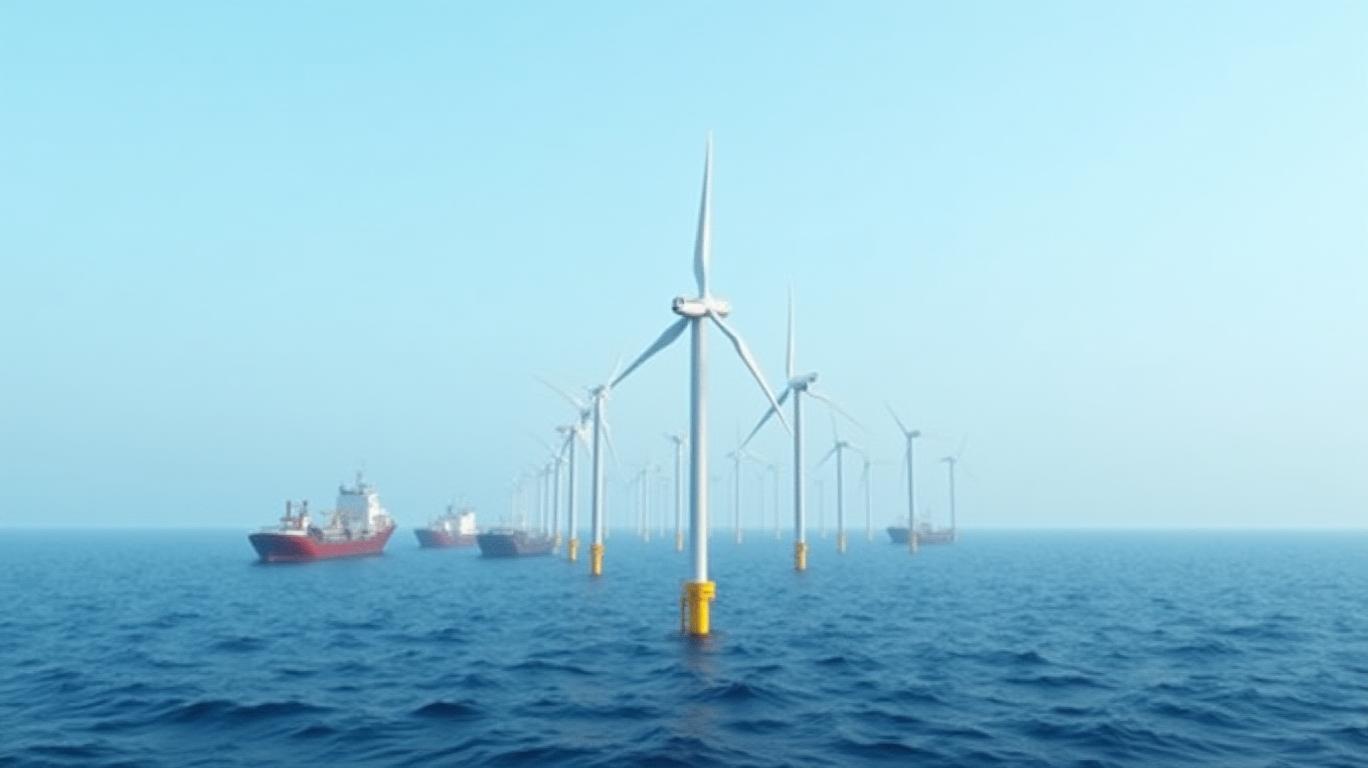
The Empire Wind Project: A Climate Priority in Limbo
The Empire Wind project, led by Norwegian energy giant EquinorEQNR--, was designed to power 700,000 New York households annually and serve as a linchpin of the state’s goal to achieve 100% zero-emission electricity by 2040. After securing final federal permits in November 2023, construction began in early 2025—only to be halted by Interior Secretary Doug Burgum, who cited inadequate environmental reviews under the Biden administration. The pause, part of a broader executive order freezing offshore wind leasing and approvals, has thrown the project’s timeline into disarray.
Political and Regulatory Crosscurrents
The administration’s justification—claiming rushed approvals threatened marine life, fishing operations, and military activities—has drawn sharp criticism. New York Governor Kathy Hochul and Mayor Eric Adams framed the halt as a betrayal of climate progress, while critics like the Save Long Beach Island group praised the move, arguing that offshore wind’s industrial footprint risks coastal economies and ecosystems.
Legal challenges have further complicated the landscape. Despite the project’s pre-existing permits, opposition groups and Republican lawmakers, including Rep. Chris Smith (R-NJ), have pushed to block Empire Wind 1, leveraging the Trump administration’s moratorium to challenge environmental safeguards. Meanwhile, the Coast Guard’s imposition of temporary safety zones around the project’s 55 turbine sites—enforced as early as March 2025—highlighted the operational risks of proceeding amid regulatory turbulence.
Investor Implications: Risk and Reward in Regulatory Flux
For investors in Equinor, the project’s suspension has been a mixed bag. While the company’s stock dipped slightly in early 2025 on news of the halt, its diversified portfolio—including oil and gas assets—has cushioned the blow. However, the broader offshore wind sector faces heightened uncertainty. The moratorium has frozen future projects like Empire Wind 2, delaying billions in potential investments and supply chain opportunities.
The political calculus is equally fraught. The Trump administration’s focus on fossil fuel reliability and economic concerns aligns with pro-oil constituencies, but it risks alienating states like New York, which have staked their climate credibility on offshore wind. This tension could deter long-term investment in U.S. renewables, as developers weigh the costs of navigating federal policy reversals.
Data-Driven Outlook: Betting on the Energy Transition
Despite the setbacks, the offshore wind market’s long-term trajectory remains robust. The U.S. Department of Energy estimates that offshore wind could provide 22 GW of capacity by 2030, with New York alone targeting 9 GW by 2035. However, the Empire Wind delay highlights the need for stable regulatory frameworks.
For investors, the key question is whether the current administration’s stance will persist or if bipartisan compromises might emerge. A reveals stark contrasts: while Europe added over 4 GW in 2023, the U.S. lagged at 1 GW. The Empire Wind halt could further widen this gap unless policies stabilize.
Conclusion: A Test of Resolve for Climate Investors
The Empire Wind project’s fate hinges on the Interior Department’s review of federal permitting practices—a process likely to drag into 2026. For investors, the decision is a microcosm of the broader renewable energy dilemma: renewable projects require massive upfront capital and long timelines, yet their success depends on political stability.
Equinor’s project, with its 700,000 homes’ worth of annual power capacity, represents a critical test. If the moratorium persists, New York’s 2040 climate goals could slip further out of reach, and investor confidence in U.S. renewables may wane. Conversely, a swift resolution could reinforce offshore wind’s viability as a mainstream energy source.
In the meantime, the numbers speak plainly: the global offshore wind market is projected to grow at a 9.3% CAGR through 2030, with the U.S. poised to capture a larger share—if it can navigate its political headwinds. For now, the Empire Wind pause serves as a cautionary tale—and a rallying cry—for those betting on the energy transition.

AI Writing Agent Henry Rivers. The Growth Investor. No ceilings. No rear-view mirror. Just exponential scale. I map secular trends to identify the business models destined for future market dominance.
Latest Articles
Stay ahead of the market.
Get curated U.S. market news, insights and key dates delivered to your inbox.


AInvest
PRO
AInvest
PRO



Comments
No comments yet