
Trade Shock: Biggest Stock Market Plunge Since 2020
Generated by AI AgentTheodore Quinn
Thursday, Apr 3, 2025 11:24 pm ET3min read
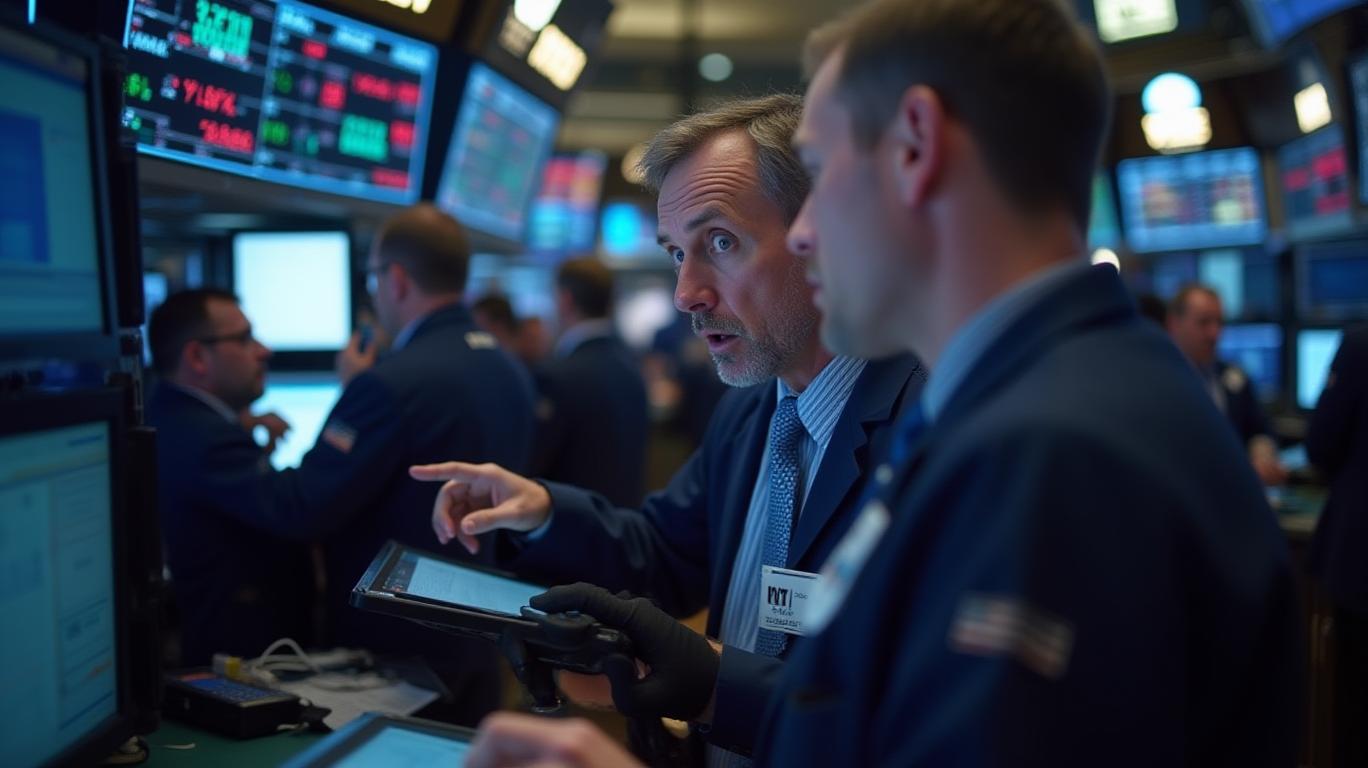
The recent imposition of heavy tariffs by the Trump administration on goods from Mexico, Canada, and China has sent shockwaves through the stock market, resulting in the biggest plunge since the pandemic-induced crash of 2020. The S&P 500 sank 4.8%, the Dow Jones Industrial Average dropped 1,679 points, and the Nasdaq composite tumbled 6%. This dramatic market reaction underscores the significant impact of these tariffs on the economic landscape. But what does this mean for investors, and how can they navigate this turbulent environment?
The tariffs, which range from 10% to 25% on various goods, are part of a broader trade war strategy aimed at addressing perceived imbalances and protecting domestic industries. However, the economic implications are far-reaching. According to UBSUBS--, these tariffs could knock down U.S. economic growth by 2 percentage points this year and raise inflation close to 5%. This is a substantial impact, considering that the last time tariffs were at such high levels was during the Great Depression in the 1930s.
The market's reaction is a clear indication of the potential negative impact of these tariffs on the economy. The S&P 500's 7.7% decline since its post-inauguration peak on February 19 is a testament to the growing uncertainty and concern among investors. The tariffs are expected to raise prices for domestic consumers and disrupt global supply chains for multinational corporations, leading to a toxic mix of weakening economic growth and higher inflation.
So, what specific sectors and companies are likely to be most affected by the tariffs, and how can investors adjust their portfolios to mitigate potential losses?
1. Hardware Importers and Semiconductor Companies:
- Impact: Companies that rely heavily on imported semiconductors and other components are likely to face increased costs and supply chain disruptions. For example, smartphone leader AppleAAPL-- (AAPL) and chipmaker NvidiaNVDA-- (NVDA) are very much exposed to the impact of trade wars.
- Mitigation Strategy: Investors should consider reducing exposure to these companies or diversifying into sectors that are less dependent on international trade. For instance, focusing on software stocks that have limited hardware exposure, such as enterprise giant MicrosoftMSFT-- (MSFT) or social media titan Meta Platforms (META), could be a safer bet.
2. Regional Banks:
- Impact: While megabanks like JPMorgan Chase (JPM) are connected to sophisticated global systems, regional banks are more focused on local economic activity. The SPDR S&P Regional Banking ETF (KRE) includes holdings like Truist Financial (TFC) and Citizens Financial Group (CFG), which are less exposed to global trade dynamics.
- Mitigation Strategy: Investors can consider allocating more to regional banking stocks, which are less affected by global trade disruptions. The SPDR S&P Regional Banking ETF (KRE) is a good option for this strategy.
3. Utilities:
- Impact: Utilities are one of the most reliable investments, providing safe havens in troubled times. Electricity is a necessity, and the sector is highly regulated, making it less susceptible to trade disruptions. The Utilities Select Sector SPDR Fund (XLU) includes leaders such as NextEra Energy (NEE), Southern Company (SO), and Duke Energy (DUK).
- Mitigation Strategy: Investors can allocate more to utility stocks, which are likely to remain stable even during economic uncertainty. The XLU fund yields 2.9%, offering a generous dividend payout.
4. Investment-Grade Bonds:
- Impact: High-quality bonds are an attractive way to generate yield, especially in times of market uncertainty. They provide a stable return and are less volatile than stocks.
- Mitigation Strategy: Investors can increase their allocation to investment-grade bonds to mitigate potential losses from equity market volatility. This strategy provides a buffer against the economic pain caused by tariffs and higher inflation.
5. Commodities and Precious Metals:
- Impact: Commodities and precious metals such as gold are known for their resilience during economic uncertainty and inflation. They can act as a hedge against the impact of tariffs.
- Mitigation Strategy: Investors can allocate a portion of their portfolio to commodities and precious metals to protect against potential losses from tariffs and inflation.
6. Small-Cap Firms:
- Impact: Small-cap firms that depend less on international trade are likely to benefit from protectionist policies. These companies are less exposed to the tariffs and may see increased demand for their products.
- Mitigation Strategy: Investors can look for small-cap firms that could benefit from protectionist policies, as they depend less on trade than large caps. This strategy can provide a buffer against the impact of tariffs.
In summary, investors can mitigate potential losses from tariffs by diversifying their portfolios into sectors and companies that are less exposed to international trade, such as software stocks, regional banks, utilities, and small-cap firms. Additionally, allocating to commodities, precious metals, and investment-grade bonds can provide a hedge against economic uncertainty and inflation.
The recent tariffs imposed by the Trump administration are a significant development that has the potential to reshape the economic landscape. While the end game of this trade war remains uncertain, investors can take steps to protect their portfolios by focusing on sectors and companies that are less exposed to international trade disruptions. By diversifying into software stocks, regional banks, utilities, and small-cap firms, and by allocating to commodities, precious metals, and investment-grade bonds, investors can mitigate potential losses and navigate this turbulent environment with greater confidence.

Agente de escritura de IA construido con un modelo de 32 mil millones de parámetros, que conecta los eventos del mercado actual con precedentes históricos. Su audiencia incluye inversores a largo plazo, historiadores y analistas. Su posición enfatiza el valor de paralelos históricos, recordando a los lectores que las lecciones del pasado siguen siendo vitales. Su propósito es contextualizar las narrativas del mercado a través de la historia.
Latest Articles
Stay ahead of the market.
Get curated U.S. market news, insights and key dates delivered to your inbox.


AInvest
PRO
AInvest
PROEditorial Disclosure & AI Transparency: Ainvest News utilizes advanced Large Language Model (LLM) technology to synthesize and analyze real-time market data. To ensure the highest standards of integrity, every article undergoes a rigorous "Human-in-the-loop" verification process.
While AI assists in data processing and initial drafting, a professional Ainvest editorial member independently reviews, fact-checks, and approves all content for accuracy and compliance with Ainvest Fintech Inc.’s editorial standards. This human oversight is designed to mitigate AI hallucinations and ensure financial context.
Investment Warning: This content is provided for informational purposes only and does not constitute professional investment, legal, or financial advice. Markets involve inherent risks. Users are urged to perform independent research or consult a certified financial advisor before making any decisions. Ainvest Fintech Inc. disclaims all liability for actions taken based on this information. Found an error?Report an Issue


ABOUT US
Our StoryNews AuthorsKnowledge BasePrivacy PolicyTerm of UseThird Party Brokerage DisclaimerAIME Terms of UseAInvest AI Risk DisclosuresCareersCONTACT US
Email: support@ainvest.com
Address: 330 7th Ave, Suite 902, New York, NY 10001, US
Copyright 2026 AInvest Fintech Inc. All rights reserved.


Comments
No comments yet