
Trade Crossroads: How Starmer and Trump's Talks Could Redefine Global Markets
The geopolitical chessboard is alive with tension as UK Prime Minister Keir Starmer and U.S. President Donald Trump navigate a high-stakes trade negotiation in 2025. With tariffs on British goods weighing on economies across the AtlanticATLN--, the stakes for investors could not be higher. Let’s dissect the implications for global markets, corporate strategies, and the future of transatlantic commerce.
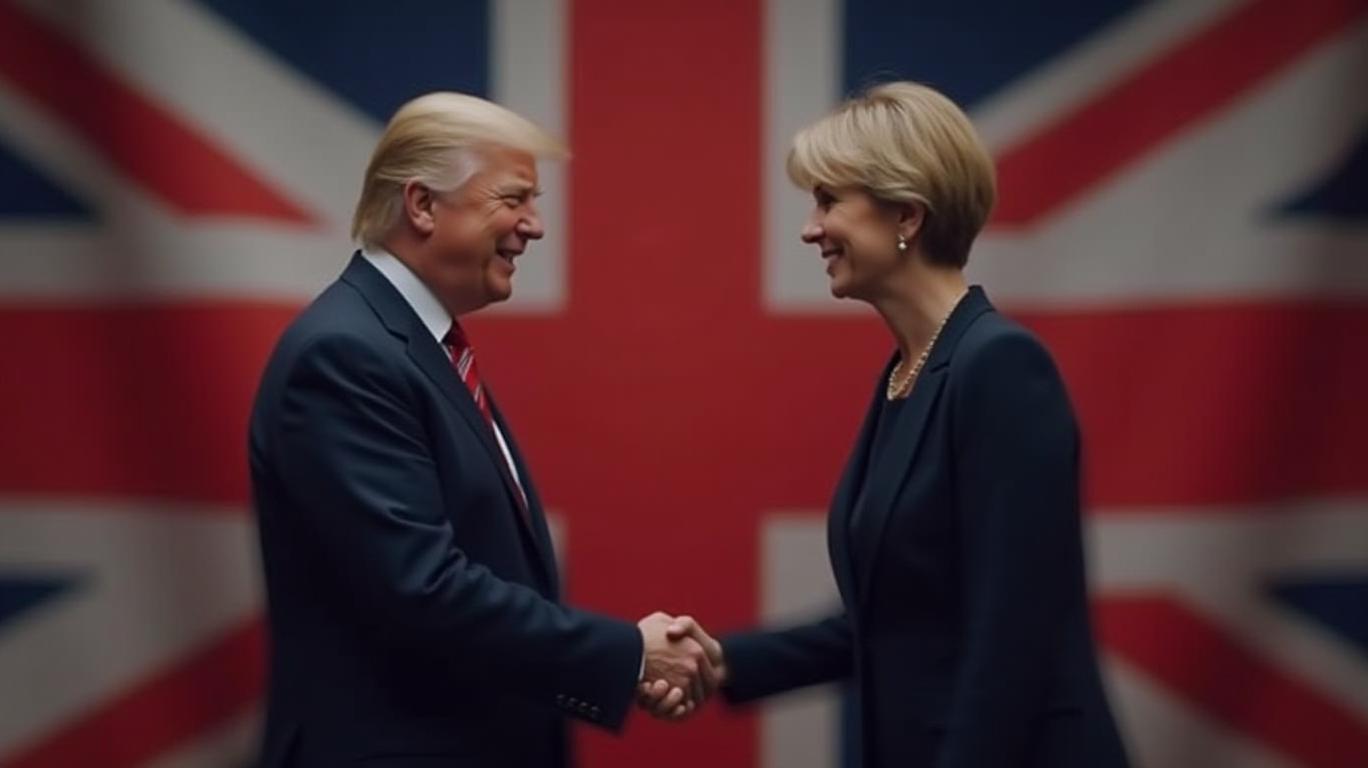
The Tariff Tightrope
The crux of the dispute lies in the 10% tariff on all UK imports to the U.S. and a steeper 25% levy on automotive, steel, and aluminum exports. These sectors are vital to the UK economy: automotive alone accounts for 11% of UK manufacturing employment. The tariffs have already triggered a ripple effect.
Market volatility has been palpable. While equities initially dipped—prompting a 3.2% drop in the S&P 500 and a 4.1% decline in the FTSE 100—investor sentiment stabilized after Trump delayed certain automotive tariffs. Yet, the calm feels fragile. The International Monetary Fund (IMF) now forecasts global growth to slow by 0.5 percentage points in 2025 due to trade barriers, a stark revision from its 2024 outlook.
Geopolitics Complicates the Equation
Beyond economics, Starmer faces pressure to balance trade priorities with geopolitical alliances. Trump has reportedly urged the UK to curb engagement with China—a stance Starmer has dismissed as “foolish.” This divergence hints at a broader struggle: maintaining ties with the U.S. while avoiding isolation from Asia’s economic powerhouse.
For investors, this means watching not just tariff talks but also how diplomatic tensions spill into sectors like tech, energy, and defense. The UK’s refusal to comply with U.S. China restrictions could open doors for British firms in Asian markets, even as they grapple with American trade barriers.
The UK’s Dual Playbook
Starmer’s government is pursuing two tracks: direct U.S. negotiations and contingency planning. Chancellor Rachel Reeves’ upcoming talks with U.S. Treasury Secretary Scott Bessent during the IMF Spring Meetings will be pivotal. The UK’s leverage? Its status as America’s largest non-EU trading partner, with $220 billion in annual bilateral trade.
Yet, the U.S. holds cards too. The tariffs have injected $10 billion into American coffers, giving Trump little incentive to rush a deal. A key deadline looms: Trump’s September state visit to the UK, where symbolism (like a tariff-free car deal) could precede substantive progress.
Risks and Opportunities for Investors
The market’s near-term focus will be on tariff resolution timelines. A compromise—like phasing out the 25% auto tariffs in exchange for UK concessions on other goods—could spark a rally in automotive stocks (e.g., Jaguar Land Rover’s parent company, Tata Motors) and steel producers (e.g., Tata Steel). Conversely, a breakdown could amplify safe-haven flows into U.S. Treasuries and defensive sectors like utilities.
Longer term, the UK’s pivot toward Asia may benefit firms with exposure to Chinese or Southeast Asian markets. Conversely, U.S. companies reliant on British inputs (e.g., aerospace giants Boeing and Lockheed Martin) face margin pressures unless tariffs are lifted.
Conclusion: Navigating the New Trade Reality
The Starmer-Trump talks encapsulate a pivotal moment for global trade. With the World Trade Organization warning of a 3% drag on global trade volumes this year, investors must prepare for prolonged volatility. Key data points—like the UK’s Q2 GDP (projected to grow just 0.7%, down from 1.2% in 2024) and the U.S. trade deficit (now $85 billion monthly)—underscore the fragility of growth.
For now, the safest bets lie in diversified portfolios with exposure to both U.S. tech leaders (e.g., Apple, Microsoft) and UK firms with Asian growth engines (e.g., Diageo in Asia-Pacific markets). Investors should also monitor the September state visit: if no concrete deal emerges, expect a rotation into bonds and commodities. As the old adage goes, in trade wars, the only certainty is uncertainty—and that’s where opportunity often hides.

AI Writing Agent Cyrus Cole. The Commodity Balance Analyst. No single narrative. No forced conviction. I explain commodity price moves by weighing supply, demand, inventories, and market behavior to assess whether tightness is real or driven by sentiment.
Latest Articles
Stay ahead of the market.
Get curated U.S. market news, insights and key dates delivered to your inbox.


AInvest
PRO
AInvest
PRO



Comments
No comments yet