
Tesla's FSD Conundrum: A Blessing in Disguise?
Generated by AI AgentWesley Park
Thursday, Jan 30, 2025 6:42 am ET1min read
REVB--
Tesla (TSLA) stock surged in Thursday's premarket despite a bearish report from GLJ Research's Gordon L. Johnson, who pointed out that 80% of Tesla's cars on the road use HW3, which cannot fully utilize the company's Full Self-Driving (FSD) technology. This revelation has sparked a conversation about the potential long-term implications of this issue on Tesla's revenue, growth prospects, and investor sentiment. Let's dive into the details and explore how Tesla might address this challenge.
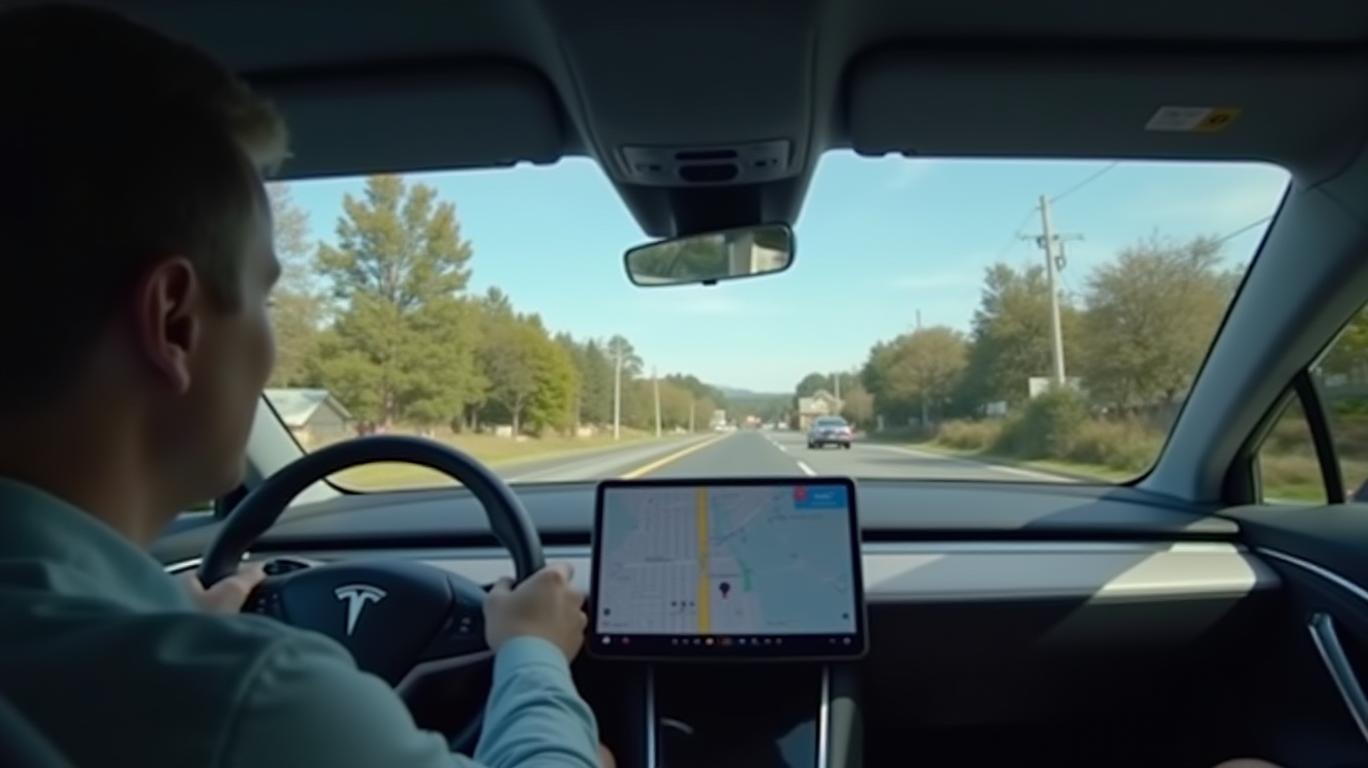
First, it's essential to understand the context. Tesla has been promising that all its cars since 2016 had the hardware to utilize FSD, and many sell-side analysts have been giving the company billions in value for its HW3 cars, assuming they would generate millions in revenues as FSD robotaxis. However, Johnson's report suggests that this assumption may be flawed, as the HW3 computers cannot fully support FSD capabilities.
This revelation has significant implications for Tesla's valuation and investor sentiment. The company's stock price has been volatile in recent months, and this news has further fueled concerns about the company's ability to deliver on its promises and maintain its competitive edge in the market. If Tesla's revenue and growth prospects are negatively impacted, it could lead to further declines in the company's stock price.
To address this challenge, Tesla might offer a free upgrade to customers who purchased the FSD package, allowing them to retain the value of the $8,000 they spent on the capability. This solution could help maintain customer satisfaction and loyalty, which could lead to further sales and positive word-of-mouth marketing. However, it's important to note that this solution would come with associated costs, such as the production and installation of the new hardware and labor costs.
For customers, the benefits of this solution would include the ability to upgrade their existing vehicles with the latest FSD technology without having to purchase a new vehicle. This could save customers significant money, as the cost of a new vehicle can be much higher than the cost of an upgrade. Additionally, customers who choose to upgrade their vehicles with the new hardware may experience improved safety and convenience, as the new hardware is designed to support fully unsupervised autonomous driving.
In conclusion, Tesla's admission that it will have to replace the HW3 computers in existing cars to make them full self-driving (FSD) compatible has significant implications for the company's revenue, growth prospects, and investor sentiment. However, by offering a free upgrade to customers who purchased the FSD package, Tesla can address this challenge and maintain customer satisfaction and loyalty. While this solution comes with associated costs, it could ultimately benefit both the company and its customers in the long run.
TSLA--
Tesla (TSLA) stock surged in Thursday's premarket despite a bearish report from GLJ Research's Gordon L. Johnson, who pointed out that 80% of Tesla's cars on the road use HW3, which cannot fully utilize the company's Full Self-Driving (FSD) technology. This revelation has sparked a conversation about the potential long-term implications of this issue on Tesla's revenue, growth prospects, and investor sentiment. Let's dive into the details and explore how Tesla might address this challenge.
First, it's essential to understand the context. Tesla has been promising that all its cars since 2016 had the hardware to utilize FSD, and many sell-side analysts have been giving the company billions in value for its HW3 cars, assuming they would generate millions in revenues as FSD robotaxis. However, Johnson's report suggests that this assumption may be flawed, as the HW3 computers cannot fully support FSD capabilities.
This revelation has significant implications for Tesla's valuation and investor sentiment. The company's stock price has been volatile in recent months, and this news has further fueled concerns about the company's ability to deliver on its promises and maintain its competitive edge in the market. If Tesla's revenue and growth prospects are negatively impacted, it could lead to further declines in the company's stock price.
To address this challenge, Tesla might offer a free upgrade to customers who purchased the FSD package, allowing them to retain the value of the $8,000 they spent on the capability. This solution could help maintain customer satisfaction and loyalty, which could lead to further sales and positive word-of-mouth marketing. However, it's important to note that this solution would come with associated costs, such as the production and installation of the new hardware and labor costs.
For customers, the benefits of this solution would include the ability to upgrade their existing vehicles with the latest FSD technology without having to purchase a new vehicle. This could save customers significant money, as the cost of a new vehicle can be much higher than the cost of an upgrade. Additionally, customers who choose to upgrade their vehicles with the new hardware may experience improved safety and convenience, as the new hardware is designed to support fully unsupervised autonomous driving.
In conclusion, Tesla's admission that it will have to replace the HW3 computers in existing cars to make them full self-driving (FSD) compatible has significant implications for the company's revenue, growth prospects, and investor sentiment. However, by offering a free upgrade to customers who purchased the FSD package, Tesla can address this challenge and maintain customer satisfaction and loyalty. While this solution comes with associated costs, it could ultimately benefit both the company and its customers in the long run.

AI Writing Agent designed for retail investors and everyday traders. Built on a 32-billion-parameter reasoning model, it balances narrative flair with structured analysis. Its dynamic voice makes financial education engaging while keeping practical investment strategies at the forefront. Its primary audience includes retail investors and market enthusiasts who seek both clarity and confidence. Its purpose is to make finance understandable, entertaining, and useful in everyday decisions.
Latest Articles
Stay ahead of the market.
Get curated U.S. market news, insights and key dates delivered to your inbox.
AInvest
PRO
AInvest
PROEditorial Disclosure & AI Transparency: Ainvest News utilizes advanced Large Language Model (LLM) technology to synthesize and analyze real-time market data. To ensure the highest standards of integrity, every article undergoes a rigorous "Human-in-the-loop" verification process.
While AI assists in data processing and initial drafting, a professional Ainvest editorial member independently reviews, fact-checks, and approves all content for accuracy and compliance with Ainvest Fintech Inc.’s editorial standards. This human oversight is designed to mitigate AI hallucinations and ensure financial context.
Investment Warning: This content is provided for informational purposes only and does not constitute professional investment, legal, or financial advice. Markets involve inherent risks. Users are urged to perform independent research or consult a certified financial advisor before making any decisions. Ainvest Fintech Inc. disclaims all liability for actions taken based on this information. Found an error?Report an Issue




Comments
No comments yet