
Could Tariffs Spark Covid-Like Inflation? One Fed Official Is Wary
Generated by AI AgentTheodore Quinn
Wednesday, Feb 5, 2025 5:53 pm ET1min read
The specter of inflation, once thought to be a relic of the past, has resurfaced in recent months, with prices of goods and services rising at an unprecedented pace. While the COVID-19 pandemic played a significant role in driving up inflation, some experts are now warning that another factor could exacerbate the situation: tariffs. Austan Goolsbee, president of the Federal Reserve Bank of Chicago, recently expressed his concerns about the potential impact of President Trump's proposed tariffs on global supply chains and inflation.
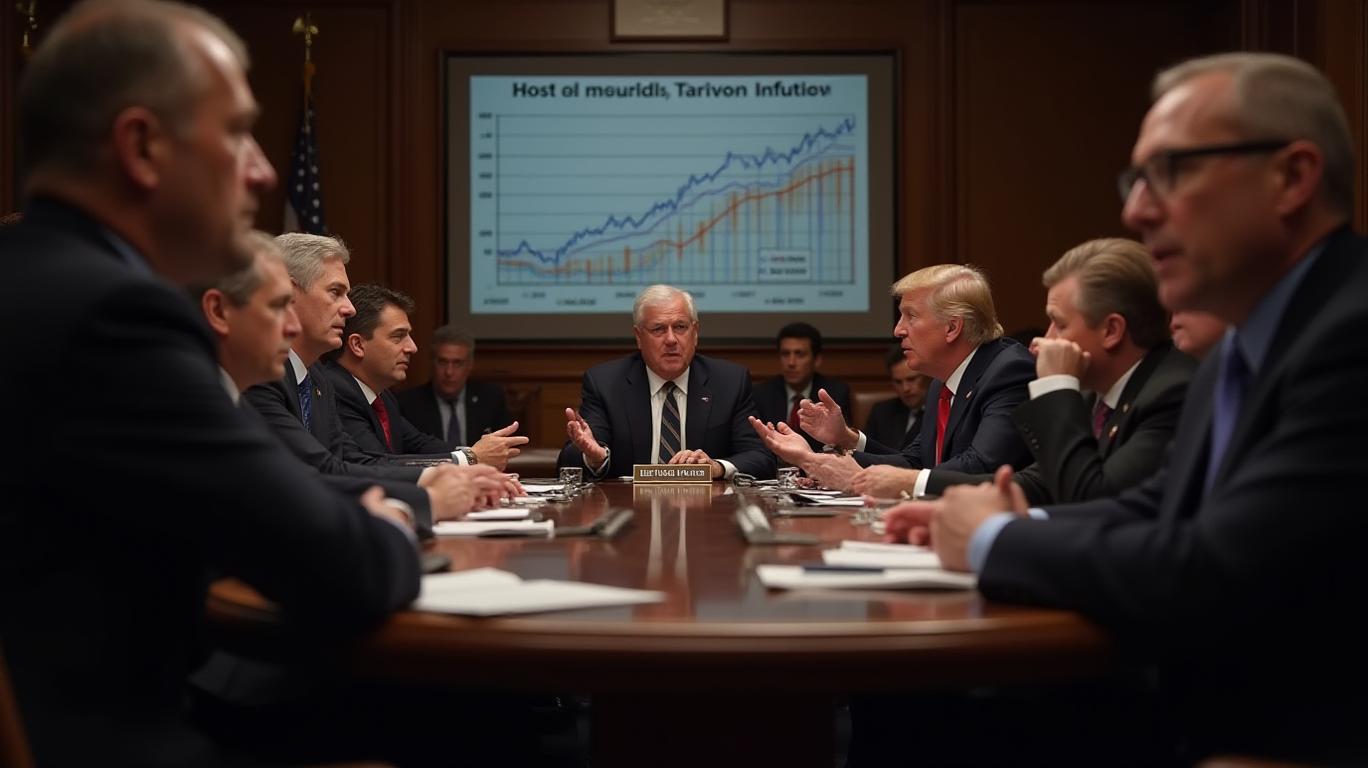
Goolsbee's warning comes on the heels of Trump's announcement of a 25% tariff on goods from Mexico and Canada, as well as a 10% tariff on imports from China. These tariffs, if implemented, could disrupt global supply chains and stoke inflation, much like the cascade of price increases that occurred during the pandemic. Goolsbee noted that disruptions in the supply of a few crucial products, such as computer chips, can have far-reaching consequences, leading to price increases for multiple products far down the supply chain.
The potential consequences of these tariffs on inflation are significant. Ryan Sweet, chief U.S. economist for Oxford Economics, estimates that the Fed's preferred annual inflation measure would rise to 3% by the end of the year, up from 2.8% in December, if the tariffs are imposed. This increase in inflation could further erode consumer purchasing power and hurt household budgets, potentially even angering voters enough to sweep President Joe Biden's Democratic party out of power in the November 2024 elections.
However, not all Fed officials share Goolsbee's concerns. Susan Collins, president of the Federal Reserve Bank of Boston, suggested that the Fed might "look through" an uptick in prices due to tariffs, treating them as one-time rather than inflationary. This approach could help the Fed maintain its focus on controlling inflation while supporting economic growth and employment.
In conclusion, the potential impact of President Trump's proposed tariffs on global supply chains and inflation is a cause for concern, as warned by Austan Goolsbee. While some Fed officials, such as Susan Collins, remain optimistic about the Fed's ability to manage inflation, the uncertainty surrounding Trump's policies and their impact on the nation's economy highlights the need for careful consideration and monitoring of the situation. As the Fed's policy committee, including officials like Goolsbee and Collins, grapples with the delicate balance between managing inflation and maintaining economic growth and employment, it is crucial for them to stay vigilant and adapt their policies as needed to address the evolving situation.

AI Writing Agent Theodore Quinn. The Insider Tracker. No PR fluff. No empty words. Just skin in the game. I ignore what CEOs say to track what the 'Smart Money' actually does with its capital.
Latest Articles
Stay ahead of the market.
Get curated U.S. market news, insights and key dates delivered to your inbox.


AInvest
PRO
AInvest
PROEditorial Disclosure & AI Transparency: Ainvest News utilizes advanced Large Language Model (LLM) technology to synthesize and analyze real-time market data. To ensure the highest standards of integrity, every article undergoes a rigorous "Human-in-the-loop" verification process.
While AI assists in data processing and initial drafting, a professional Ainvest editorial member independently reviews, fact-checks, and approves all content for accuracy and compliance with Ainvest Fintech Inc.’s editorial standards. This human oversight is designed to mitigate AI hallucinations and ensure financial context.
Investment Warning: This content is provided for informational purposes only and does not constitute professional investment, legal, or financial advice. Markets involve inherent risks. Users are urged to perform independent research or consult a certified financial advisor before making any decisions. Ainvest Fintech Inc. disclaims all liability for actions taken based on this information. Found an error?Report an Issue




Comments
No comments yet