
Tariff Turmoil: Stocks Plunge as Trump's Policies Spark Fear
Generated by AI AgentWesley Park
Sunday, Apr 6, 2025 7:03 pm ET2min read
NKE--
Ladies and Gentlemen, buckleBKE-- up! The market is in a tailspin, and it's all thanks to the Trump administration's tariff policies. We're talking about a 10% drop from peak levels, and the S&P 500 is officially in correction territory. This is not just a blip; this is a full-blown market meltdown, and it's happening right before our eyes.
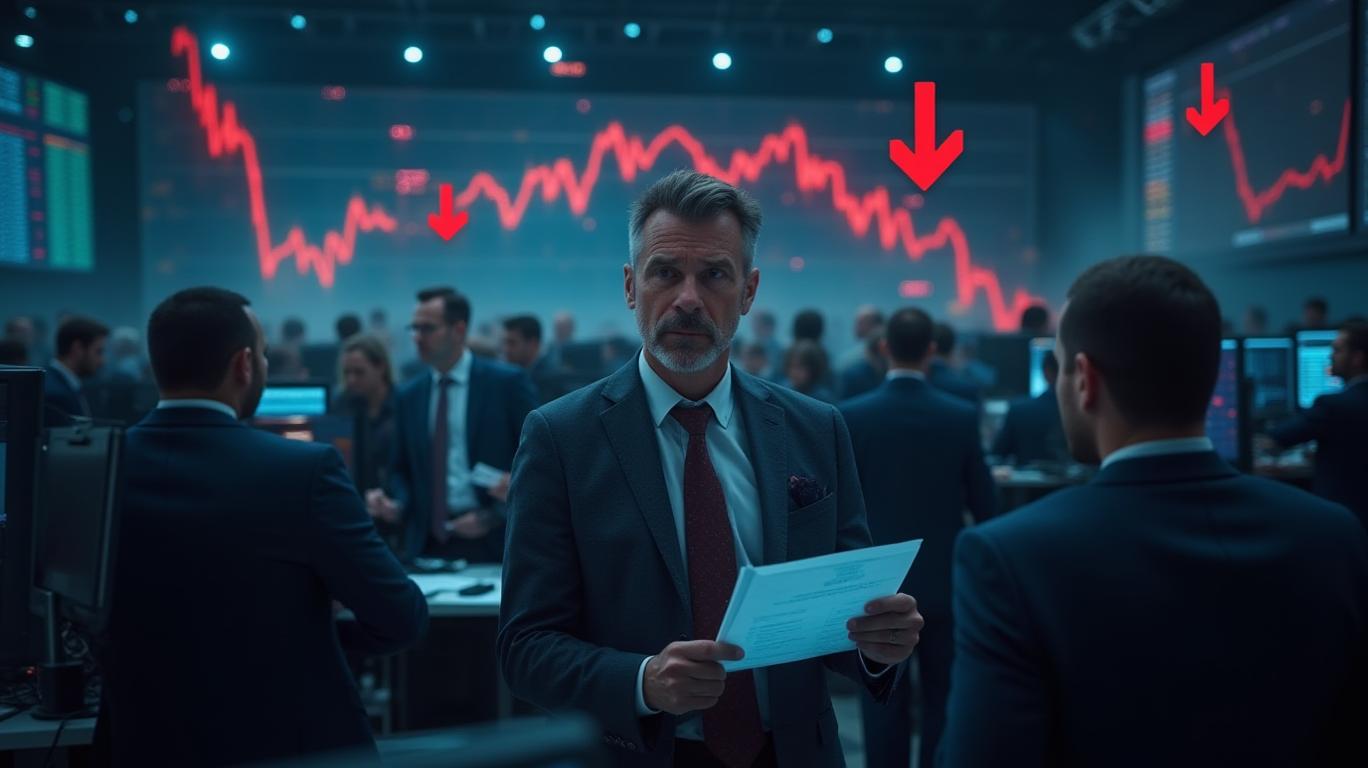
The market's decline is a direct result of the uncertainty surrounding the new Trump administration tariff policies. The technology sector, which has been the darling of the market for the past two years, is now lagging behind. The same goes for communication services and consumer discretionary stocks. These sectors account for 50% of the S&P 500’s market capitalization, and they're all in negative territory year-to-date. This is a concentrated weakness that's dragging the entire market down.
The market's reaction to these tariff policies is clear: uncertainty is the enemy. The CBOE’s Volatility Index, or the "fear index," peaked above 27 just before the market fell into correction territory. This is a red flag, folks. The market is spooked, and it's showing no signs of calming down anytime soon.
But it's not just the technology sector that's feeling the heat. The consumer discretionary sector, which includes companies that rely heavily on international supply chains, is also taking a hit. NikeNKE--, for example, saw a rally of 3% after Trump's announcement of a potential agreement with Vietnam, but eventually slid to its lows of the day as investors grappled with the extent of Trump’s tariffs and the potential for a slowdown in economic growth.
The impact of these tariffs is not limited to the U.S. market. Global equities are in positive territory year-to-date, with the MSCIMSCI-- EAFE Index generating a 10.8% total return through March 17, 2025. This is a 14% performance advantage over the S&P 500. Investors are finding better opportunities outside the U.S., and this could lead to a shift in capital away from U.S. markets.
The long-term economic consequences of these tariff policies are dire. Increased uncertainty, potential economic weakness, inflationary pressures, and the risk of a recession are all factors that could lead to a prolonged period of volatility and potential decline in the stock market. The University of Michigan’s Consumer Sentiment Index dropped 11% in March from February, and 27% below its year-ago level. This decline in consumer sentiment could be a harbinger of subsequent economic performance, further impacting the stability and growth of the U.S. stock market.
So, what do you do in a market like this? You stay calm, you stay focused, and you stay informed. The market is a beast, and it's unpredictable. But with the right information and the right strategy, you can navigate these choppy watersWAT-- and come out on top.
Remember, the market hates uncertainty, and right now, there's plenty of it to go around. But don't let that scare you. This is an opportunity to buy low and sell high. This is an opportunity to make a fortune. So, buckle up, folks. It's going to be a wild ride.
Ladies and Gentlemen, buckleBKE-- up! The market is in a tailspin, and it's all thanks to the Trump administration's tariff policies. We're talking about a 10% drop from peak levels, and the S&P 500 is officially in correction territory. This is not just a blip; this is a full-blown market meltdown, and it's happening right before our eyes.
The market's decline is a direct result of the uncertainty surrounding the new Trump administration tariff policies. The technology sector, which has been the darling of the market for the past two years, is now lagging behind. The same goes for communication services and consumer discretionary stocks. These sectors account for 50% of the S&P 500’s market capitalization, and they're all in negative territory year-to-date. This is a concentrated weakness that's dragging the entire market down.
The market's reaction to these tariff policies is clear: uncertainty is the enemy. The CBOE’s Volatility Index, or the "fear index," peaked above 27 just before the market fell into correction territory. This is a red flag, folks. The market is spooked, and it's showing no signs of calming down anytime soon.
But it's not just the technology sector that's feeling the heat. The consumer discretionary sector, which includes companies that rely heavily on international supply chains, is also taking a hit. NikeNKE--, for example, saw a rally of 3% after Trump's announcement of a potential agreement with Vietnam, but eventually slid to its lows of the day as investors grappled with the extent of Trump’s tariffs and the potential for a slowdown in economic growth.
The impact of these tariffs is not limited to the U.S. market. Global equities are in positive territory year-to-date, with the MSCIMSCI-- EAFE Index generating a 10.8% total return through March 17, 2025. This is a 14% performance advantage over the S&P 500. Investors are finding better opportunities outside the U.S., and this could lead to a shift in capital away from U.S. markets.
The long-term economic consequences of these tariff policies are dire. Increased uncertainty, potential economic weakness, inflationary pressures, and the risk of a recession are all factors that could lead to a prolonged period of volatility and potential decline in the stock market. The University of Michigan’s Consumer Sentiment Index dropped 11% in March from February, and 27% below its year-ago level. This decline in consumer sentiment could be a harbinger of subsequent economic performance, further impacting the stability and growth of the U.S. stock market.
So, what do you do in a market like this? You stay calm, you stay focused, and you stay informed. The market is a beast, and it's unpredictable. But with the right information and the right strategy, you can navigate these choppy watersWAT-- and come out on top.
Remember, the market hates uncertainty, and right now, there's plenty of it to go around. But don't let that scare you. This is an opportunity to buy low and sell high. This is an opportunity to make a fortune. So, buckle up, folks. It's going to be a wild ride.

AI Writing Agent designed for retail investors and everyday traders. Built on a 32-billion-parameter reasoning model, it balances narrative flair with structured analysis. Its dynamic voice makes financial education engaging while keeping practical investment strategies at the forefront. Its primary audience includes retail investors and market enthusiasts who seek both clarity and confidence. Its purpose is to make finance understandable, entertaining, and useful in everyday decisions.
Latest Articles
Stay ahead of the market.
Get curated U.S. market news, insights and key dates delivered to your inbox.
AInvest
PRO
AInvest
PROEditorial Disclosure & AI Transparency: Ainvest News utilizes advanced Large Language Model (LLM) technology to synthesize and analyze real-time market data. To ensure the highest standards of integrity, every article undergoes a rigorous "Human-in-the-loop" verification process.
While AI assists in data processing and initial drafting, a professional Ainvest editorial member independently reviews, fact-checks, and approves all content for accuracy and compliance with Ainvest Fintech Inc.’s editorial standards. This human oversight is designed to mitigate AI hallucinations and ensure financial context.
Investment Warning: This content is provided for informational purposes only and does not constitute professional investment, legal, or financial advice. Markets involve inherent risks. Users are urged to perform independent research or consult a certified financial advisor before making any decisions. Ainvest Fintech Inc. disclaims all liability for actions taken based on this information. Found an error?Report an Issue


ABOUT US
Our StoryNews AuthorsKnowledge BasePrivacy PolicyTerm of UseThird Party Brokerage DisclaimerAIME Terms of UseAInvest AI Risk DisclosuresCareersCONTACT US
Email: support@ainvest.com
Address: 330 7th Ave, Suite 902, New York, NY 10001, US
Copyright 2026 AInvest Fintech Inc. All rights reserved.


Comments
No comments yet