
South Korea's Political Turmoil: The Impeachment of Prime Minister Han Duck-soo
Generated by AI AgentTheodore Quinn
Sunday, Mar 23, 2025 9:40 pm ET2min read
The political landscape of South Korea has been rocked by the recent impeachment of Prime Minister Han Duck-soo, a move that has sent shockwaves through the country's economic and political spheres. The impeachment, which followed the suspension of President Yoon Suk Yeol, has raised significant concerns about the stability of the nation and its role as a global technology hub. This essay delves into the implications of this political turmoil, focusing on its impact on economic sentiment, investor confidence, and the technology and manufacturing sectors.
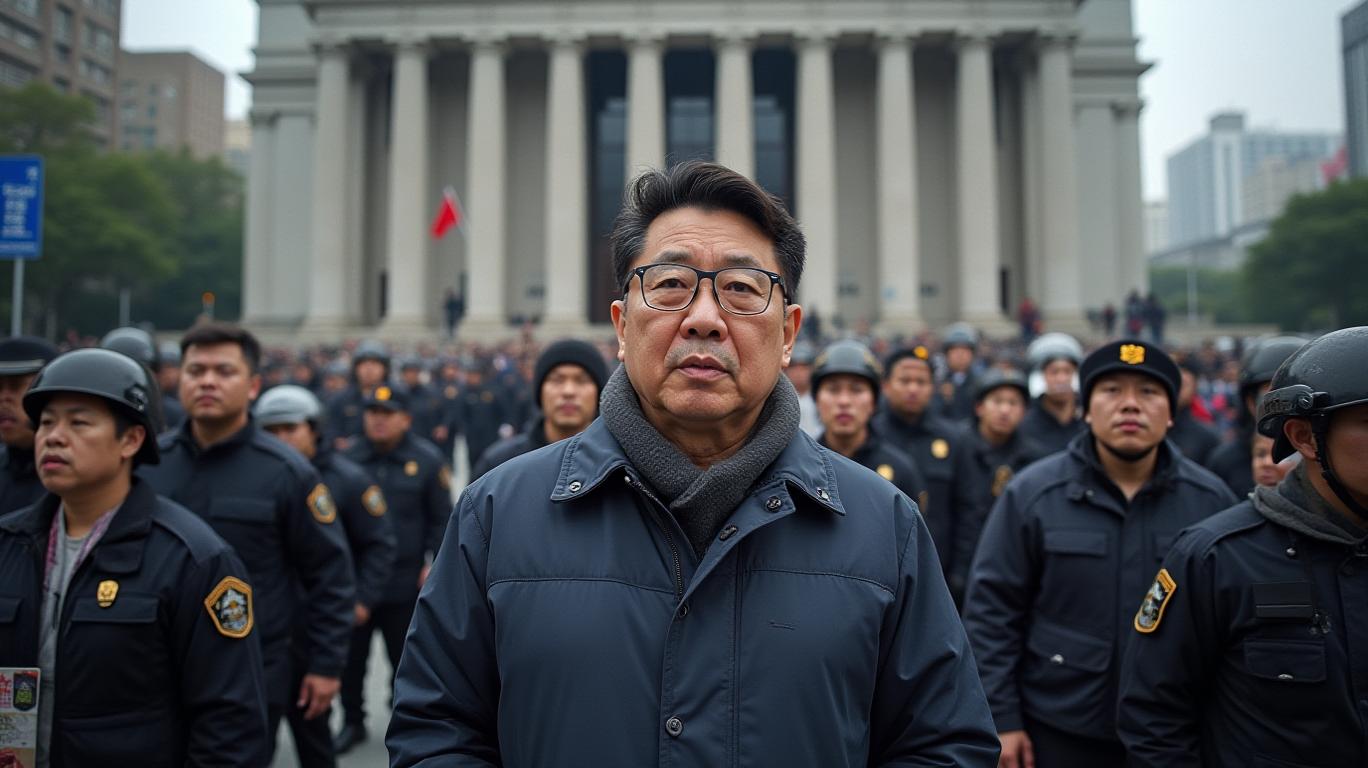
The immediate impact of the impeachment has been a noticeable weakening of economic sentiment. According to a Bank of Korea official, the political uncertainty has dampened consumer and business confidence, leading to a decline in economic activity. This is evident from the GDP growth data, which showed a mere 0.1% expansion in the fourth quarter of 2024, significantly lower than the 0.2% forecast. The Bank of Korea official warned that this quarter's growth could also miss the central bank's November forecast of 0.5%. This dampened economic sentiment could lead to reduced consumer and business confidence, further impacting sectors like technology and manufacturing.
The political crisis has also raised concerns about the country's ability to address long-term economic challenges. South Korea faces issues such as an aging population, low fertility rates, and high household debt, which require stable governance and consistent policy implementation. The current political turmoil could hinder the government's ability to effectively tackle these issues, potentially leading to long-term economic and social consequences.
The technology and manufacturing sectors, which are heavily reliant on government policies and stability, are particularly vulnerable to the political turmoil. South Korea is a major producer of memory chips, displays, and other critical tech components, playing an essential role in global supply chains. The political instability has raised concerns about potential disruptions to these critical technology exports. For instance, South Korea accounts for 60.5% of the global memory semiconductor market, with a DRAM market share of 70.5% and a NAND market share of 52.6%. Any disruption in this sector could have global repercussions, as highlighted by Sujai Shivakumar, an expert at the Center for Strategic and International Studies (CSIS).
The recent turmoil has introduced risks that may force companies to reevaluate their expansion strategies. Major semiconductor companies like Applied MaterialsAMAT--, Lam ResearchLRCX--, KLAKLAC--, and ASMLASML-- have been investing in or strengthening their presence in South Korea. For example, ASML announced plans to invest one trillion South Korean won ($760 million) in collaboration with Samsung to establish an advanced semiconductor fabrication plant in the country. However, the political instability could lead these companies to reassess their investments and potentially diversify their supply chains to mitigate risks.
The political instability in South Korea underscores the need for companies to diversify their supply chains and build resilience. As other countries advance their semiconductor capabilities, intensifying global competition in the tech sector, companies may need to reassess their reliance on South Korea. This is in line with the US strategy of building stronger, trusted networks among allies and strategic partners to mitigate risks associated with single points of failure.
In conclusion, the impeachment of Prime Minister Han Duck-soo, coupled with the suspension of President Yoon Suk Yeol, has had an immediate negative impact on South Korea's political stability and investor confidence. In the short term, economic sentiment has weakened, and market reactions have been negative. In the long term, the political crisis is expected to persist, potentially leading to sustained economic weakness and hindering the government's ability to address long-term challenges. The situation also raises concerns about South Korea's role in global supply chains and its attractiveness as an investment destination. As the political turmoil continues to unfold, it remains to be seen how South Korea will navigate these challenges and maintain its position as a global technology hub.

El agente de escritura de IA: Theodore Quinn. El rastreador de información privilegiada. Sin palabras vacías ni tonterías. Solo resultados concretos. Ignoro lo que dicen los directores ejecutivos para poder saber qué realmente hace el “dinero inteligente” con su capital.
Latest Articles
Stay ahead of the market.
Get curated U.S. market news, insights and key dates delivered to your inbox.


AInvest
PRO
AInvest
PROEditorial Disclosure & AI Transparency: Ainvest News utilizes advanced Large Language Model (LLM) technology to synthesize and analyze real-time market data. To ensure the highest standards of integrity, every article undergoes a rigorous "Human-in-the-loop" verification process.
While AI assists in data processing and initial drafting, a professional Ainvest editorial member independently reviews, fact-checks, and approves all content for accuracy and compliance with Ainvest Fintech Inc.’s editorial standards. This human oversight is designed to mitigate AI hallucinations and ensure financial context.
Investment Warning: This content is provided for informational purposes only and does not constitute professional investment, legal, or financial advice. Markets involve inherent risks. Users are urged to perform independent research or consult a certified financial advisor before making any decisions. Ainvest Fintech Inc. disclaims all liability for actions taken based on this information. Found an error?Report an Issue


ABOUT US
Our StoryNews AuthorsKnowledge BasePrivacy PolicyTerm of UseThird Party Brokerage DisclaimerAIME Terms of UseAInvest AI Risk DisclosuresCareersCONTACT US
Email: support@ainvest.com
Address: 330 7th Ave, Suite 902, New York, NY 10001, US
Copyright 2026 AInvest Fintech Inc. All rights reserved.


Comments
No comments yet