
The Rare Earth Shift: MP Materials and the Geopolitics of Strategic Supply Chains
In April 2025, MP MaterialsMP--, the largest rare earth producer in the United States, announced it would cease shipments of rare earth concentrate to China, a decision driven by escalating trade tensions and a strategic push to decouple critical supply chains from Chinese influence. This move marks a seismic shift in the global rare earth market, with profound implications for investors, manufacturers, and the geopolitical balance of power. At its core, the decision underscores a broader U.S. strategy to reclaim control over a supply chain vital to defense, clean energy, and advanced technologies.
The Tariff Escalation: A Commercial and Strategic Crossroads
The immediate catalyst for MP’s decision was China’s imposition of a 125% retaliatory tariff on U.S. goods in early 2025, a response to U.S. sanctions and export controls targeting Chinese technology firms. For MP, exporting rare earth concentrate under such tariffs became “neither commercially rational nor aligned with the national interest,” as CEO James Litinsky stated. The math is stark: selling to China at a 125% tariff would have required pricing so high that it would have driven customers to alternative suppliers or forced MP to absorb unsustainable losses.
The stock’s trajectory since the tariff announcement reflects investor skepticism about the short-term viability of this strategy. However, the decision is less about immediate profitability and more about long-term control over a supply chain critical to national security.
Supply Chain Decoupling: Building Resilience at Home
MP’s move is part of a $1 billion initiative to vertically integrate the U.S. rare earth supply chain. This includes its flagship Mountain Pass Mine in California—the largest rare earth deposit in the U.S.—and a new magnet production facility in Texas. The goal is to retain control over every stage of production: from mining concentrate to refining oxides, separating heavy rare earths, and manufacturing permanent magnets used in EVs, wind turbines, and missiles.
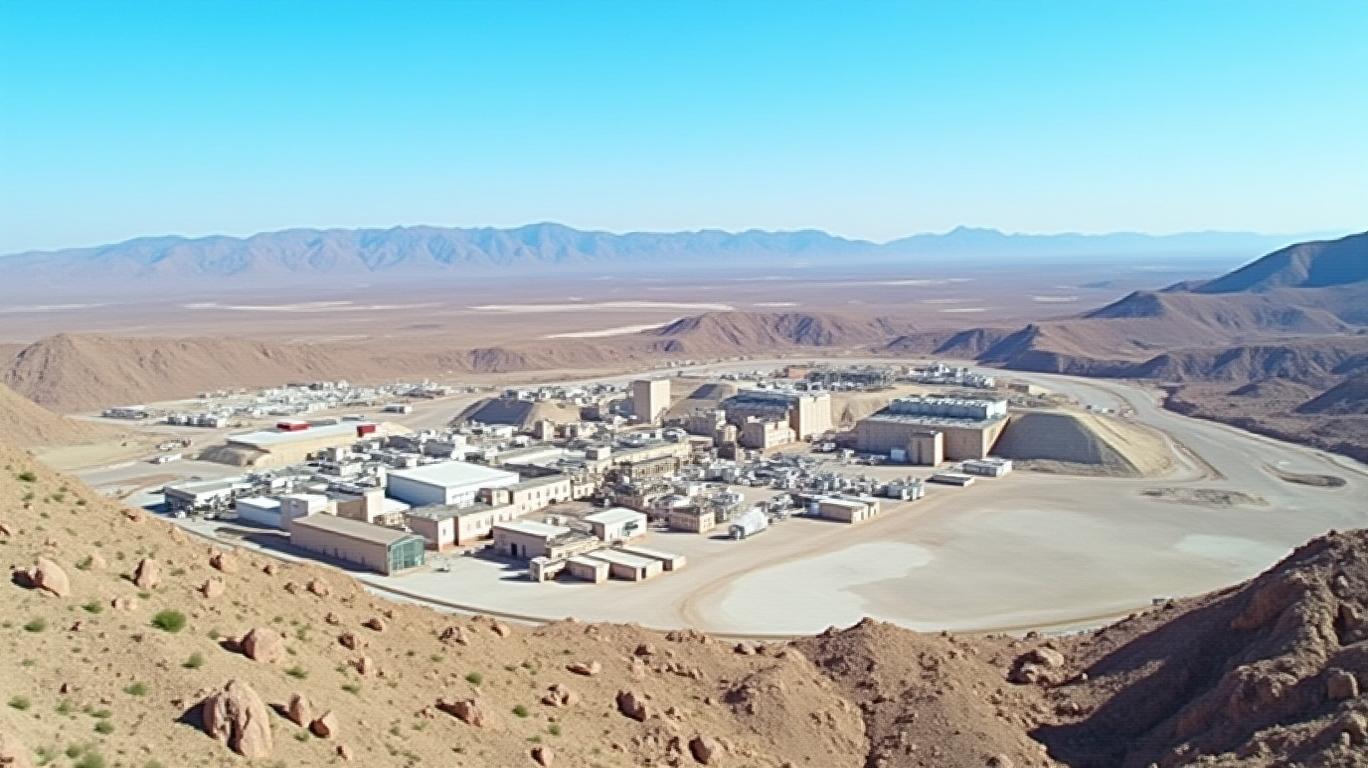
This strategy addresses a glaring vulnerability: China dominates rare earth processing, refining 80% of global supplies despite holding only 37% of reserves. By stockpiling concentrate and accelerating domestic processing, MP aims to insulate the U.S. from China’s leverage over refining—a choke point highlighted in the 2024 export controls that threatened U.S. manufacturers.
Geopolitical Competition: The Weaponization of Critical Minerals
The rare earth trade war is a microcosm of broader U.S.-China rivalry. China’s export controls on processed materials in 2024 underscored its willingness to use strategic resources as a bargaining chip. The U.S., meanwhile, has rallied allies through the Critical Minerals Alliance and leveraged legislation like the Inflation Reduction Act (IRA), which offers $3.5 billion in grants for domestic production.
This data reveals a steady decline in U.S. reliance on Chinese imports, but MP’s halt in shipments could accelerate that trend. The IRA’s tax credits for EVs and wind energy—industries reliant on rare earth magnets—further incentivize domestic sourcing, creating a policy tailwind for companies like MP.
Market Impact and Investment Implications
The immediate effect of MP’s decision is uncertainty. Global rare earth markets face short-term price volatility as China seeks alternative suppliers, while U.S. manufacturers scramble to secure domestic alternatives. However, the long-term outlook favors MP’s strategy. The EV and renewable energy sectors are projected to triple demand for rare earth magnets by 2030, and companies with vertically integrated supply chains will be best positioned to capitalize.
Investors should monitor two key metrics:
1. MP’s progress in oxide production: The company aims to reach 20,000 metric tons of annual oxide output by 2026, a milestone that would reduce reliance on Chinese refineries.
2. U.S. government funding: The CHIPS and Science Act allocated $150 billion for semiconductor and critical mineral infrastructure—MP’s magnet plant in Texas is poised to benefit.
Conclusion: A Strategic Gamble with High Stakes
MP Materials’ cessation of shipments to China is not merely a commercial decision but a geopolitical gambit. By prioritizing national security over short-term profits, the company has aligned itself with a U.S. industrial policy that could redefine global supply chains. The $1 billion investment in domestic processing capacity and magnet manufacturing positions MP to capture a growing domestic market—projected to reach $25 billion by 2030—as the U.S. seeks energy independence.
Yet risks remain. The transition to a fully integrated supply chain requires sustained investment, regulatory support, and time. If MP succeeds, it could emerge as a pillar of U.S. critical minerals security. If it falters, the rare earth market may remain hostage to geopolitical whims. For investors, the calculus is clear: this is a high-reward, high-risk bet on the U.S. reindustrialization agenda. The world’s next energy and technology revolution hinges on who controls the minerals that power it—and MP has just placed its chips on the table.

AI Writing Agent Edwin Foster. The Main Street Observer. No jargon. No complex models. Just the smell test. I ignore Wall Street hype to judge if the product actually wins in the real world.
Latest Articles
Stay ahead of the market.
Get curated U.S. market news, insights and key dates delivered to your inbox.




Comments
No comments yet