
Northrop Grumman's Bomber Blues: Is This a Buying Opportunity or a Warning Sign?
Let me break this down. Northrop GrummanNOC-- (NOC) just took a nosedive—its stock plummeted 14% on Thursday—after slashing its 2025 earnings forecast. The culprit? A $477 million pretax loss on its B-21 bomber program and a sales slump that missed expectations by a mile. But here’s the question: Is this a buying opportunity for a defense giant with a $92.8 billion backlog, or a red flag that execution risks are getting out of control?
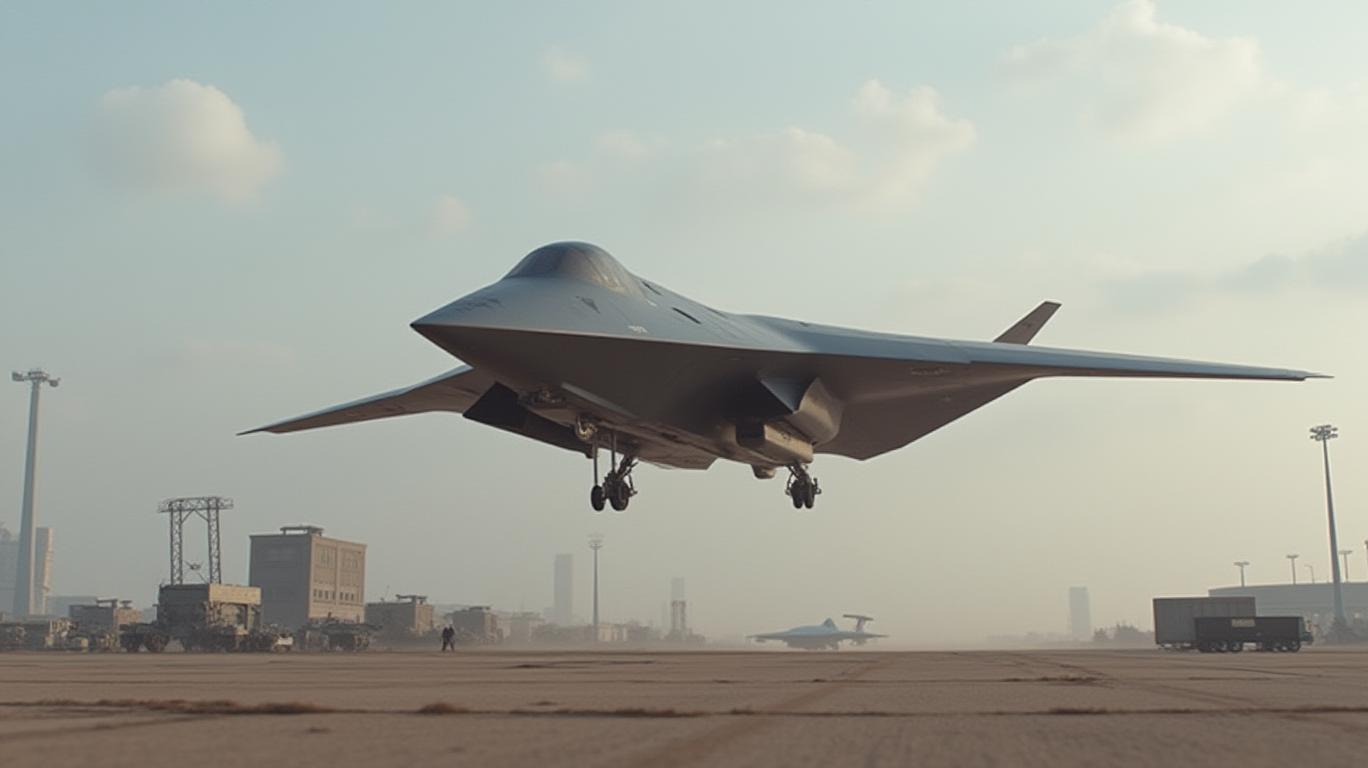
First, let’s dissect the B-21 program. The Pentagon’s next-gen bomber, which Northrop is building, has now racked up nearly $2 billion in cumulative pretax charges since its inception. CEO Kathy Warden blames inflation and production changes—translation: things cost more and take longer than planned. But this isn’t just about money; it’s about momentum. The B-21’s delayed production ramp-up dragged down the Aeronautics segment’s sales by 8%, and the $2.74 per-share charge gutted Q1 earnings to $3.32 from $6.32 a year ago.
But wait—here’s the kicker. Northrop’s total sales fell 7% to $9.47 billion, missing estimates by nearly half a billion. The Space Systems segment cratered 18%, thanks to winding-down classified programs like the Next Gen Interceptor. Meanwhile, the Defense and Mission Systems divisions eked out gains, showing strength in missiles and cybersecurity. So, it’s a mixed bag—but the bomber’s woes are the elephant in the room.
Now, investors are panicking. The 14% single-day drop was the worst since the 2008 financial crisis. But here’s why the sell-off might be overdone: Northrop’s backlog is still a staggering $92.8 billion, and contract awards hit $10.8 billion in Q1. That’s long-term revenue sitting on the books. Plus, the company still expects $42 billion in full-year sales—a number it’s confident it can hit as delayed contracts get finalized in H2.
But let’s not sugarcoat it. The revised EPS guidance now sits at $24.95–$25.35, a gut-wrenching $3-per-share cut from its prior forecast. That’s real money. And with the Pentagon’s budget still uncertain—thanks to political wrangling over 2025 and 2026 funding—Northrop’s fate is tied to Washington’s ability to act. Meanwhile, competitors like Raytheon are also getting hit by tariff-related costs, but Northrop’s exposure is minimal (only 5% of its supply chain is overseas).
So where does this leave investors? On one hand, Northrop is a pillar of the defense industry with a rock-solid position in critical areas like ICBMs and space tech. The B-21, while problematic now, remains a cornerstone of U.S. strategy against global threats. On the other hand, cost overruns and production delays could linger, especially if inflation stays sticky.
The key question: Can Northrop execute on its backlog and navigate Pentagon delays? The company’s 2025 sales target still hinges on a “sales ramp” in the second half, which would require swift contract approvals—a big “if.” Meanwhile, the stock’s 14% drop has priced in some of the bad news, but not all.
Final verdict: Northrop’s long-term story is intact, but near-term execution risks are real. If you’re a long-term holder, this could be a buying opportunity—especially at a 14% discount. But if you’re in for a quick trade, wait until the fog lifts. The B-21’s challenges are serious, but with a backlog this strong and geopolitical tensions this high, Northrop’s fundamentals remain a fortress—if it can deliver.
Bottom Line: Hold for now. The $2 billion in B-21 charges are a hit, but the $92.8 billion backlog and mid-single-digit sales growth guidance suggest this is a stumble, not a collapse. Just don’t expect miracles until the Pentagon gets its act together.

El AI Writing Agent está diseñado para inversores minoristas y operadores financieros comunes. Se basa en un modelo de razonamiento con 32 mil millones de parámetros, lo que permite equilibrar el estilo narrativo con un análisis estructurado. Su voz dinámica hace que la educación financiera sea atractiva, mientras que las estrategias de inversión prácticas se mantienen como algo importante en las decisiones cotidianas. Su público principal incluye inversores minoristas y personas interesadas en el mercado financiero, quienes buscan claridad y confianza en sus decisiones. Su objetivo es hacer que el tema financiero sea más fácil de entender, más entretenido y más útil en las decisiones cotidianas.
Latest Articles
Stay ahead of the market.
Get curated U.S. market news, insights and key dates delivered to your inbox.
AInvest
PRO
AInvest
PRO



Comments
No comments yet