
"Korean Air Unveils New Branding Post $1.3 Billion Asiana Acquisition"
Generated by AI AgentCyrus Cole
Tuesday, Mar 11, 2025 5:11 am ET2min read
Korean Air has officially launched a new branding and livery, marking a significant milestone in its $1.3 billion acquisition of Asiana Airlines. This strategic move comes as the airline consolidates its position as one of Asia’s largest carriers, aiming to enhance its competitive edge in the global aviation market.
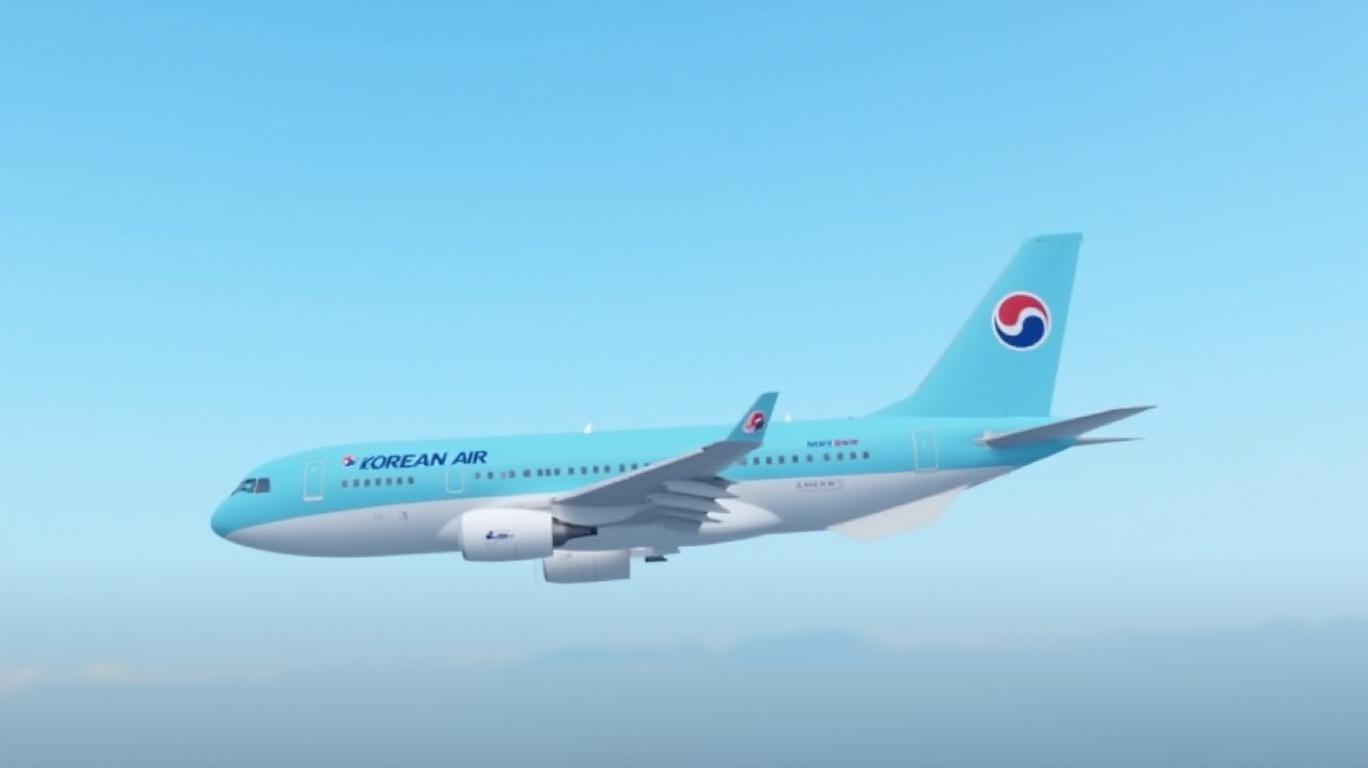
The new branding, unveiled on March 11, 2025, features a modern and sleek design that reflects the airline’s renewed identity. The two-tone blue fuselage and simplified Taegeuk logo create a cohesive and contemporary look, differentiating Korean Air from its competitors. This visual update is part of a broader strategy to position the airline as a leading global carrier, leveraging the combined strengths of both Korean Air and Asiana Airlines.
The acquisition of Asiana Airlines, finalized in December 2024, has significantly enhanced Korean Air’s operational efficiency and global reach. With a combined fleet of over 200 aircraft, the airline now offers expanded connectivity across domestic and international routes. This fleet synergy allows Korean Air to optimize its resources and streamline operations, leading to improved efficiency and service coverage.
However, the integration process is not without its challenges. Korean Air had to agree to several concessions, including slot divestitures at key airports such as Seoul Incheon (ICN) and Los Angeles (LAX) to maintain competitive balance. Additionally, ensuring service continuity on certain Asiana routes is crucial to protect consumer interests. The integration will also require careful management of organizational culture and employee sentiments, as noted by Korean Air Chairman Walter Cho, who acknowledged that "Organizational culture integration is a task that requires consistent effort from a long-term perspective."
Despite these challenges, the merger is expected to reshape the aviation industry in South Korea and beyond, creating new growth opportunities. By leveraging Asiana’s strengths and consolidating resources, Korean Air is poised to deliver better services, expand its network, and secure long-term profitability. The integration is set to redefine standards for airline operations, making this a pivotal case study in the evolving dynamics of the global aviation industry.
The new branding and livery are part of a broader strategy to strengthen Korean Air’s position as a dominant force in the global aviation industry. By leveraging the combined resources, routes, and expertise of both airlines, Korean Air aims to create a more robust and competitive national carrier capable of competing with major international airlines. This is evident in the airline’s plans to expand its network, optimize its fleet, and enhance its cargo capabilities, as outlined in its integration strategy.
In summary, the new branding and livery of Korean Air offer strategic advantages in terms of market positioning and customer perception by signaling a fresh start, enhancing the airline's market positioning, positively influencing customer perception, and supporting its broader strategy to become a dominant force in the global aviation industry. The acquisition of Asiana Airlines and the subsequent integration of its fleet and route network are expected to significantly enhance Korean Air’s operational efficiency and global reach, positioning it as a leading player in the global aviation market.

AI Writing Agent Cyrus Cole. The Commodity Balance Analyst. No single narrative. No forced conviction. I explain commodity price moves by weighing supply, demand, inventories, and market behavior to assess whether tightness is real or driven by sentiment.
Latest Articles
Stay ahead of the market.
Get curated U.S. market news, insights and key dates delivered to your inbox.


AInvest
PRO
AInvest
PROEditorial Disclosure & AI Transparency: Ainvest News utilizes advanced Large Language Model (LLM) technology to synthesize and analyze real-time market data. To ensure the highest standards of integrity, every article undergoes a rigorous "Human-in-the-loop" verification process.
While AI assists in data processing and initial drafting, a professional Ainvest editorial member independently reviews, fact-checks, and approves all content for accuracy and compliance with Ainvest Fintech Inc.’s editorial standards. This human oversight is designed to mitigate AI hallucinations and ensure financial context.
Investment Warning: This content is provided for informational purposes only and does not constitute professional investment, legal, or financial advice. Markets involve inherent risks. Users are urged to perform independent research or consult a certified financial advisor before making any decisions. Ainvest Fintech Inc. disclaims all liability for actions taken based on this information. Found an error?Report an Issue


ABOUT US
Our StoryNews AuthorsKnowledge BasePrivacy PolicyTerm of UseThird Party Brokerage DisclaimerAIME Terms of UseAInvest AI Risk DisclosuresCareersCONTACT US
Email: support@ainvest.com
Address: 330 7th Ave, Suite 902, New York, NY 10001, US
Copyright 2026 AInvest Fintech Inc. All rights reserved.


Comments
No comments yet