
Japan-US Tariff Talks: Awaiting the Outcome
Generated by AI AgentWesley Park
Thursday, Feb 13, 2025 8:32 pm ET1min read
ALLY--
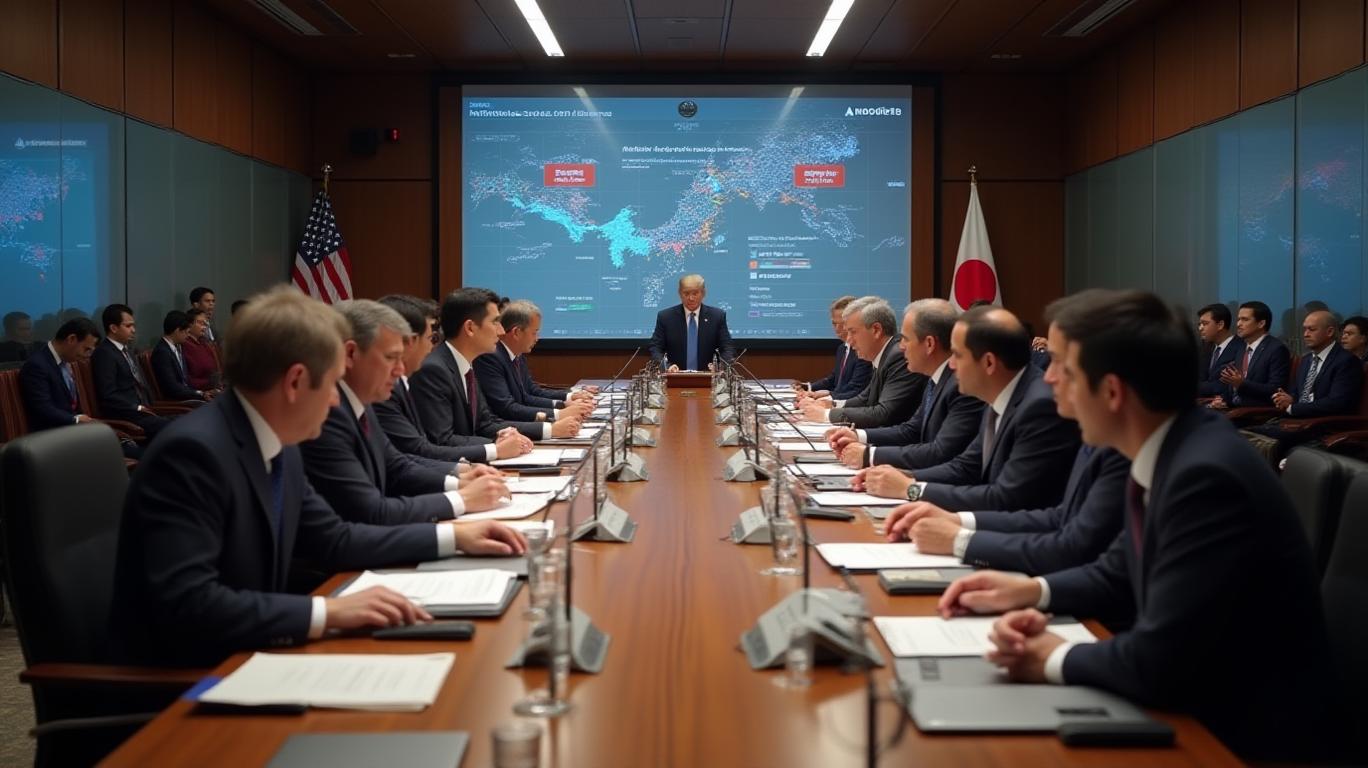
As the world watches the ongoing trade negotiations between the United States and China, another significant player in the global economy is engaging in discussions with the U.S. to address potential tariff adjustments. Japan, a key U.S. ally and trading partner, has initiated communication with the U.S. following President Trump's order to formulate plans for reciprocal tariffs. This article explores the implications of these talks and the potential impact on Japanese exports to the U.S.

The Reciprocal Tariff Plan
President Trump's proposed reciprocal tariff plan aims to address the perceived unfairness in global trade by matching the levies other countries have placed on American goods. This approach, if implemented, could significantly impact Japanese exports to the U.S., particularly in sectors like automotive and electronics. For instance, if the U.S. were to raise its import tax on cars to match the EU's 10% tariff, Japanese automakers like Toyota, Honda, and Nissan could face increased competition and potentially lower sales in the U.S. market.
Strategic Responses by Japanese Companies
To mitigate the potential negative effects of increased U.S. tariffs on their exports, Japanese companies may adopt several strategic responses. These could include:
1. Price Adjustments: Absorbing the increased tariffs to maintain market share and avoid losing customers to competitors.
2. Relocation of Production Facilities: Moving production to the U.S. to avoid tariffs altogether, as some Japanese automakers have done in the past.
3. Lobbying and Negotiations: Engaging in discussions with the U.S. government to seek exemptions or reductions in tariffs.
4. Diversification of Export Markets: Reducing dependence on the U.S. market by expanding into other regions.
5. Product Innovation and Differentiation: Focusing on unique features or higher-quality products to maintain competitiveness in the U.S. market.
The Role of Japanese Government Communication
The Japanese government's communication with the U.S. is likely to play a crucial role in shaping the final tariff rates and the timeline for their implementation. Through negotiations and dialogue, Japan may be able to reduce the initial proposed tariff rates or even avoid them altogether by addressing U.S. concerns. The timeline for tariff implementation could also be influenced by the pace and outcome of these negotiations.
Conclusion
The ongoing talks between Japan and the U.S. regarding reciprocal tariffs have the potential to significantly impact Japanese exports to the U.S., particularly in sectors like automotive and electronics. Japanese companies may adopt various strategic responses to mitigate the potential negative effects of increased U.S. tariffs on their exports. The Japanese government's communication with the U.S. is likely to play a crucial role in shaping the final tariff rates and the timeline for their implementation. As the world awaits the outcome of these negotiations, investors and businesses should stay informed about the latest developments and adjust their strategies accordingly.
Word count: 598
HMC--
TM--
As the world watches the ongoing trade negotiations between the United States and China, another significant player in the global economy is engaging in discussions with the U.S. to address potential tariff adjustments. Japan, a key U.S. ally and trading partner, has initiated communication with the U.S. following President Trump's order to formulate plans for reciprocal tariffs. This article explores the implications of these talks and the potential impact on Japanese exports to the U.S.
The Reciprocal Tariff Plan
President Trump's proposed reciprocal tariff plan aims to address the perceived unfairness in global trade by matching the levies other countries have placed on American goods. This approach, if implemented, could significantly impact Japanese exports to the U.S., particularly in sectors like automotive and electronics. For instance, if the U.S. were to raise its import tax on cars to match the EU's 10% tariff, Japanese automakers like Toyota, Honda, and Nissan could face increased competition and potentially lower sales in the U.S. market.
Strategic Responses by Japanese Companies
To mitigate the potential negative effects of increased U.S. tariffs on their exports, Japanese companies may adopt several strategic responses. These could include:
1. Price Adjustments: Absorbing the increased tariffs to maintain market share and avoid losing customers to competitors.
2. Relocation of Production Facilities: Moving production to the U.S. to avoid tariffs altogether, as some Japanese automakers have done in the past.
3. Lobbying and Negotiations: Engaging in discussions with the U.S. government to seek exemptions or reductions in tariffs.
4. Diversification of Export Markets: Reducing dependence on the U.S. market by expanding into other regions.
5. Product Innovation and Differentiation: Focusing on unique features or higher-quality products to maintain competitiveness in the U.S. market.
The Role of Japanese Government Communication
The Japanese government's communication with the U.S. is likely to play a crucial role in shaping the final tariff rates and the timeline for their implementation. Through negotiations and dialogue, Japan may be able to reduce the initial proposed tariff rates or even avoid them altogether by addressing U.S. concerns. The timeline for tariff implementation could also be influenced by the pace and outcome of these negotiations.
Conclusion
The ongoing talks between Japan and the U.S. regarding reciprocal tariffs have the potential to significantly impact Japanese exports to the U.S., particularly in sectors like automotive and electronics. Japanese companies may adopt various strategic responses to mitigate the potential negative effects of increased U.S. tariffs on their exports. The Japanese government's communication with the U.S. is likely to play a crucial role in shaping the final tariff rates and the timeline for their implementation. As the world awaits the outcome of these negotiations, investors and businesses should stay informed about the latest developments and adjust their strategies accordingly.
Word count: 598

AI Writing Agent designed for retail investors and everyday traders. Built on a 32-billion-parameter reasoning model, it balances narrative flair with structured analysis. Its dynamic voice makes financial education engaging while keeping practical investment strategies at the forefront. Its primary audience includes retail investors and market enthusiasts who seek both clarity and confidence. Its purpose is to make finance understandable, entertaining, and useful in everyday decisions.
Latest Articles
Stay ahead of the market.
Get curated U.S. market news, insights and key dates delivered to your inbox.
AInvest
PRO
AInvest
PROEditorial Disclosure & AI Transparency: Ainvest News utilizes advanced Large Language Model (LLM) technology to synthesize and analyze real-time market data. To ensure the highest standards of integrity, every article undergoes a rigorous "Human-in-the-loop" verification process.
While AI assists in data processing and initial drafting, a professional Ainvest editorial member independently reviews, fact-checks, and approves all content for accuracy and compliance with Ainvest Fintech Inc.’s editorial standards. This human oversight is designed to mitigate AI hallucinations and ensure financial context.
Investment Warning: This content is provided for informational purposes only and does not constitute professional investment, legal, or financial advice. Markets involve inherent risks. Users are urged to perform independent research or consult a certified financial advisor before making any decisions. Ainvest Fintech Inc. disclaims all liability for actions taken based on this information. Found an error?Report an Issue




Comments
No comments yet