
Japan Faces 24% Tariff Pressure as U.S. Talks Loom
As the United States and Japan prepare to engage in crucial tariff negotiations this week, the global market is poised to receive answers to a pivotal question: what does the Trump administration aim to achieve with its historic disruption of global trade?
Japan, a longstanding ally of the United States and a signatory to the 1985 Plaza Accord aimed at addressing the U.S. trade deficit, finds itself under significant pressure. The Trump administration has imposed a 24% "reciprocal tariff" on Japan, currently under a 90-day suspension but with a 10% general tariff still in effect. Additionally, a 25% tariff on automobiles has already impacted the Japanese economy.
Japan has taken a firm stance, with Prime Minister Kishi Fumio emphasizing that Japan will not rush to make significant concessions in the upcoming negotiations. He stated, "I do not believe that making major concessions to quickly end the negotiations is the right approach. Japan needs to understand the logic and emotional aspects behind Trump's statements when negotiating with the United States."
Bank of Japan Governor Ueda Tatsuya also warned that U.S. tariffs could exert downward pressure on the global and Japanese economies through various channels. Beyond the trade imbalance, Trump has frequently criticized the weak yen, which is expected to be a central issue in the upcoming talks.
Japan's negotiating team, led by Economic Revitalization Minister Akazawa Ryosuke, will visit the United States this week to meet with U.S. Treasury Secretary Mnuchin. Akazawa acknowledged the uncertainty surrounding the U.S. demands, stating that clarifying these demands will be the starting point for the negotiations.
One of the projects frequently mentioned by U.S. and Japanese officials is a liquefied natural gas project in Alaska. Mnuchin has suggested that Japan and South Korea could place large orders for this project and provide financing for its development. However, the project faces challenges such as high construction costs, a long development timeline, and uncertain profitability.
On the currency front, Japan has strategically separated the trade negotiations from the currency discussions. Finance Minister Kato Katsunobu will handle the currency talks and is scheduled to visit Washington in late April for meetings with the International Monetary Fund and the World Bank, where he may also discuss currency issues with U.S. officials.
Japan is also concerned about the potential for the U.S. to use the negotiations as a means to exert pressure on other countries. The U.S. did not consult Japan before announcing the reciprocal tariffs, raising concerns about the administration's intentions. Additionally, the U.S. may raise issues related to the U.S.-Japan Security Treaty, similar to its criticisms of NATO, potentially asking Japan to increase its defense spending as a percentage of GDP.
As the negotiations proceed, the global market will be closely monitoring for any signs of progress or setbacks. The outcome of these talks could set the tone for future trade negotiations and have a significant impact on the global economy. The Trump administration's approach to tariffs has been a contentious issue, and the upcoming negotiations with Japan will be a critical test of its strategy. 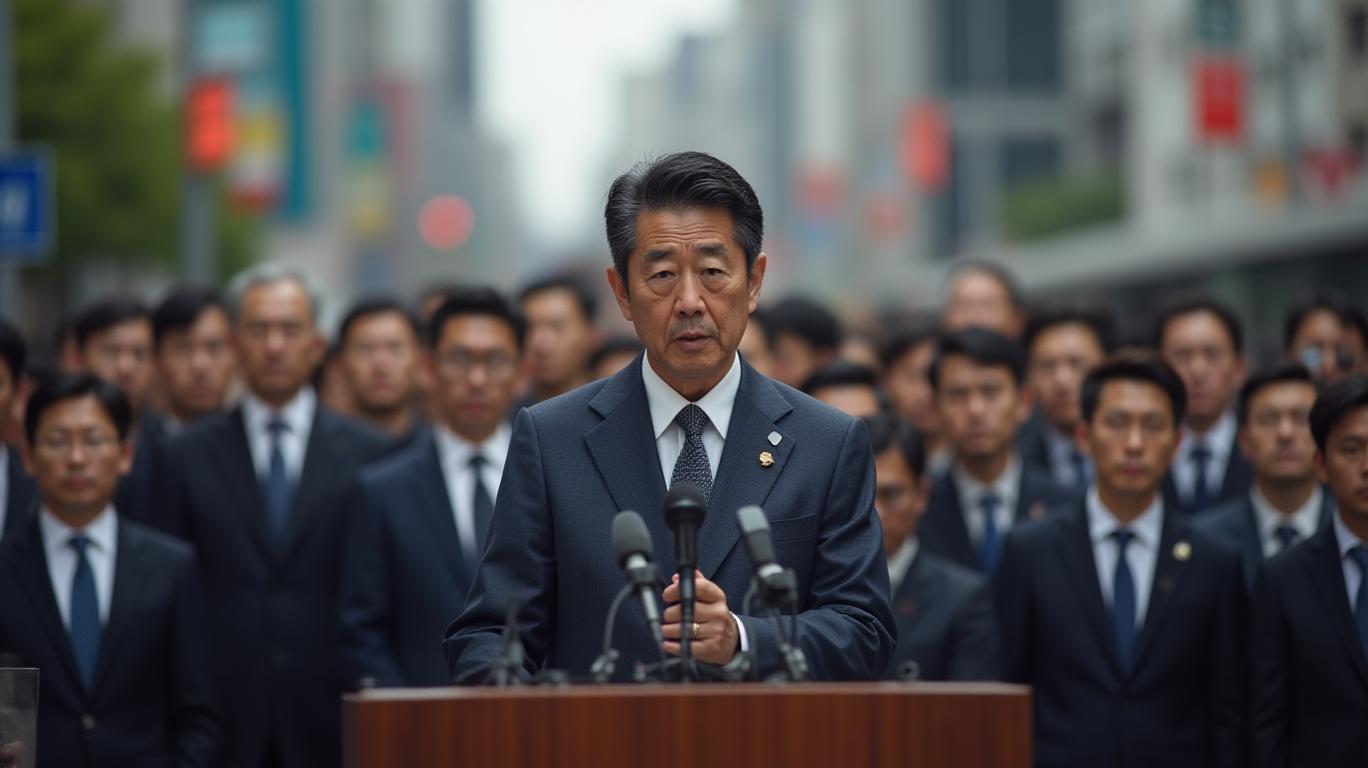

Stay ahead of the market.
Get curated U.S. market news, insights and key dates delivered to your inbox.






Comments
No comments yet