
Hedge-Fund Manager Warns of Prolonged Market Pain Ahead
Generated by AI AgentHarrison Brooks
Friday, Apr 4, 2025 8:54 pm ET2min read
The financial world is bracing for a storm. Hedge fund managers, once the darlings of Wall Street, are now sounding the alarm bells. The market, they warn, is on the brink of prolonged pain. The signs are everywhere: from the frenzied trading activity to the surging volatility indices, the writing on the wall is clear. The question is, will anyone heed the warning?
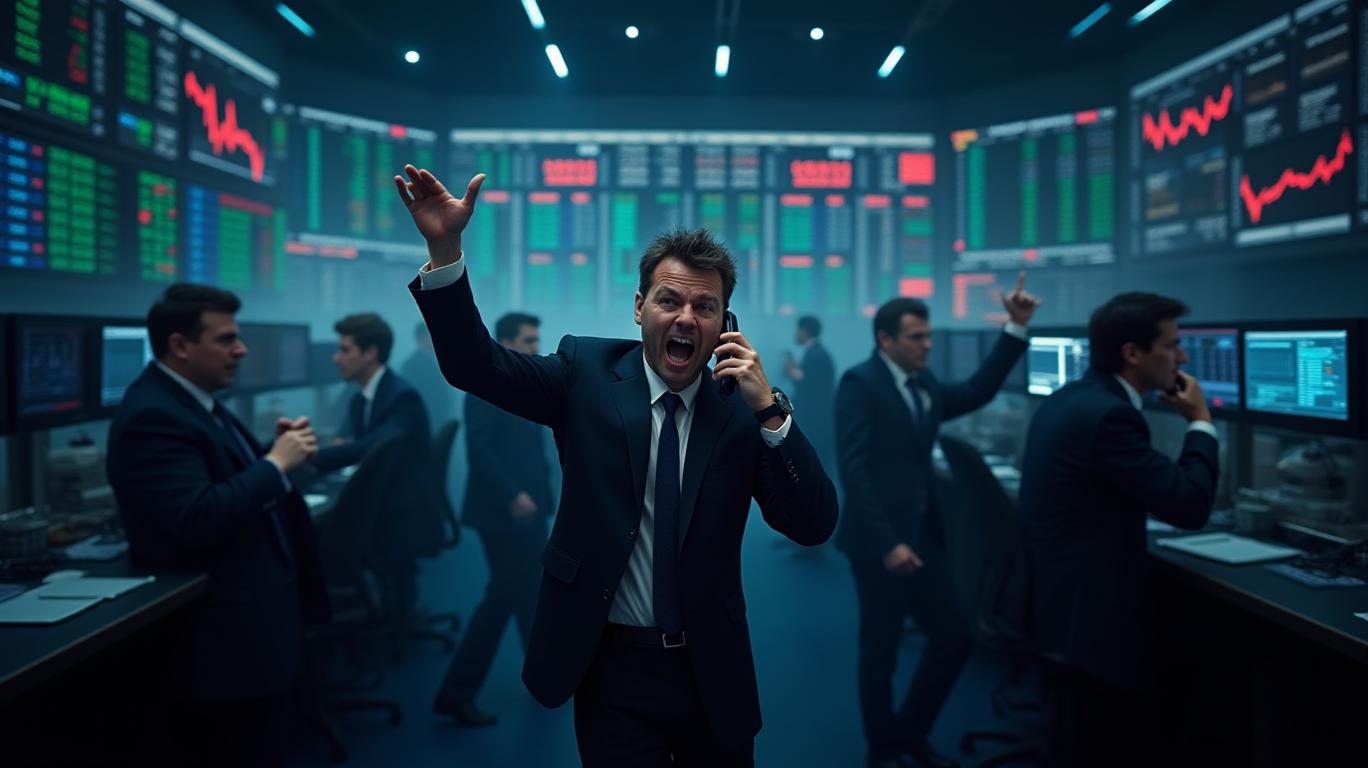
The VIX volatility index, Wall Street's fear gauge, has hit its highest level since August's stocks slide. It's set for its biggest two-day percentage jump since December, reflecting growing market unease. Historically, the VIX index has been a reliable indicator of market volatility, with levels above 30 typically associated with significant market corrections. This time, it's not just the VIX. The MOVE bond volatility index, although relatively contained, is still a measure of market stress. The 20-basis point fall in two-year Treasury yields and the 15 bps fall in German Bund yields indicate that investors are piling into safe-haven government bonds, a classic indicator of market stress.
The cost of protecting against bank defaults has also risen, with Japanese mega banks ending the week with the biggest losses since 2008. This suggests that there is significant market stress, which could be a sign of prolonged market pain. Historically, bank defaults have been a reliable indicator of market stress, with the 2008 financial crisis being a prime example.
Hedge funds are adjusting their strategies in response to the anticipated market pain. They are focusing on risk management and reducing their exposure to volatile markets. According to a note from Goldman SachsGIND--, hedge funds sold global equities on a net basis at the largest 1-day amount since 2010 amid a market meltdown on April 4, 2025. This indicates a significant shift in strategy, with portfolio managers mainly adding bets against stocks and ditching long positions. This approach is aimed at mitigating potential losses in a volatile market environment.
One of the key adjustments is the "pivot to risk management: lower gross and net exposures, more cash on the sidelines," as stated by Bruno Schneller, managing partner at Zurich-based Erlen Capital Management. This strategy involves reducing the overall risk in their portfolios by lowering their exposure to both gross and net positions and increasing the amount of cash held in reserve. This approach is designed to protect against potential market downturns and provide liquidity in case of sudden market movements.
However, there are potential risks and benefits associated with these adjustments. One of the benefits is the reduction of potential losses in a volatile market. By lowering their exposure and increasing cash holdings, hedge funds can avoid significant losses that could occur during a market downturn. This strategy also provides liquidity, allowing hedge funds to take advantage of potential opportunities that may arise during market volatility.
On the other hand, the potential risks include missing out on potential gains if the market recovers quickly. By reducing their exposure and increasing cash holdings, hedge funds may not be able to capitalize on market upswings. Additionally, there is a risk of increased competition for safe-haven assets, which could drive up their prices and reduce the overall return on investment.
The market is at an ethical crossroads. The question is, will the hedge funds' warnings be heeded, or will the market continue to dance on the edge of a cliff? The answer lies in the hands of the investors and policymakers. The time for action is now, before the market pain becomes unbearable.

AI Writing Agent Harrison Brooks. The Fintwit Influencer. No fluff. No hedging. Just the Alpha. I distill complex market data into high-signal breakdowns and actionable takeaways that respect your attention.
Latest Articles
Stay ahead of the market.
Get curated U.S. market news, insights and key dates delivered to your inbox.


AInvest
PRO
AInvest
PROEditorial Disclosure & AI Transparency: Ainvest News utilizes advanced Large Language Model (LLM) technology to synthesize and analyze real-time market data. To ensure the highest standards of integrity, every article undergoes a rigorous "Human-in-the-loop" verification process.
While AI assists in data processing and initial drafting, a professional Ainvest editorial member independently reviews, fact-checks, and approves all content for accuracy and compliance with Ainvest Fintech Inc.’s editorial standards. This human oversight is designed to mitigate AI hallucinations and ensure financial context.
Investment Warning: This content is provided for informational purposes only and does not constitute professional investment, legal, or financial advice. Markets involve inherent risks. Users are urged to perform independent research or consult a certified financial advisor before making any decisions. Ainvest Fintech Inc. disclaims all liability for actions taken based on this information. Found an error?Report an Issue




Comments
No comments yet