
Global Markets Rattle With Trump's Tariff, Dollar Weakens, Oil Tanks
Generated by AI AgentTheodore Quinn
Thursday, Apr 3, 2025 6:50 am ET2min read
The global markets woke up to a storm on Wednesday as President Donald Trump announced sweeping tariffs on all imported goods, sending shockwaves through the financial world. The U.S. dollar weakened significantly, and oil prices tanked, reflecting the market's anxiety over the potential economic fallout. This move, which Trump described as "Liberation Day," is set to reshape global trade dynamics and could have far-reaching implications for both domestic and international economies.
The tariffs, which include a 10% baseline tax on all imports and higher rates on countries with significant trade surpluses, are designed to correct what Trump sees as decades of unfair trade practices. For instance, the European Union will face a 20% tariff, China 34%, and Vietnam 46%. These measures are expected to increase the cost of imports, making goods more expensive for U.S. consumers and businesses.
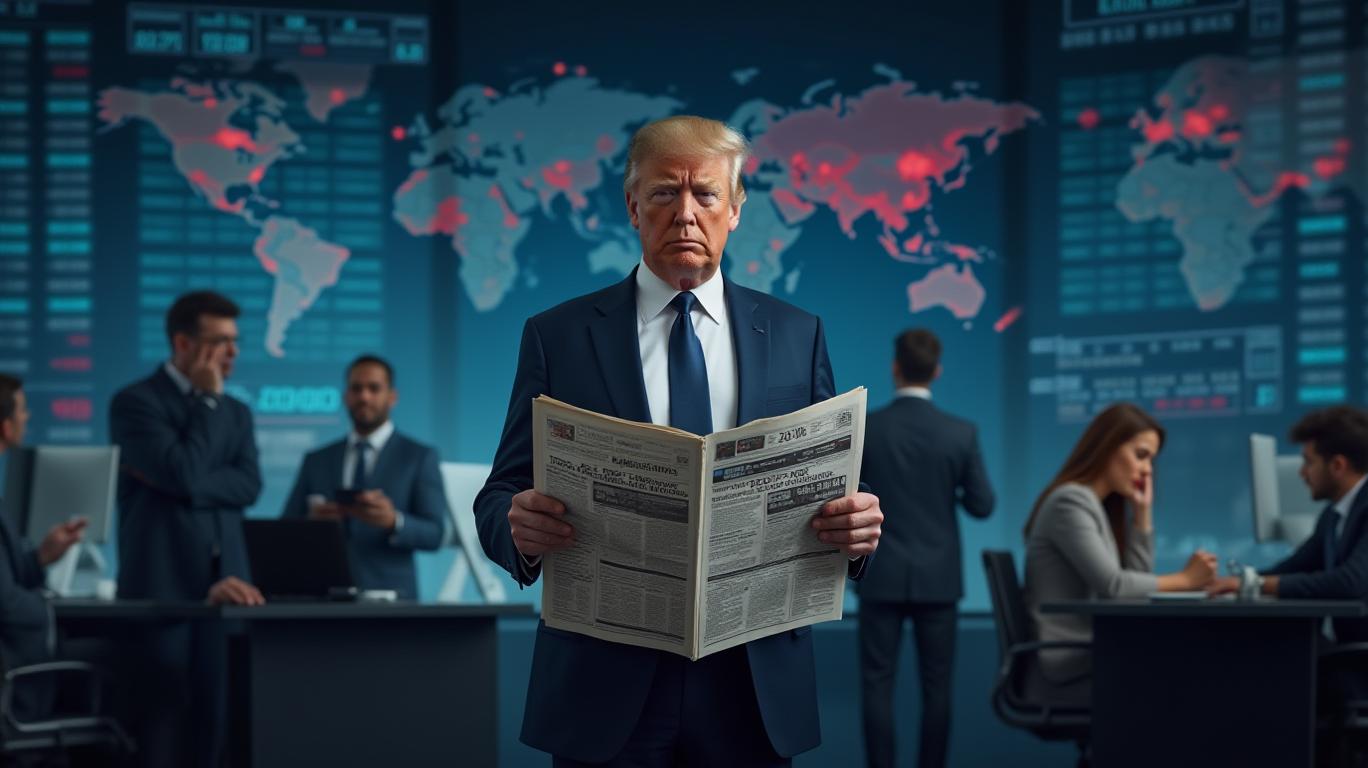
The immediate impact on the U.S. dollar was profound. As tariffs increase the cost of imports, the demand for the U.S. dollar decreases, leading to a weakening of the currency. This is evident in the statement, "Tariffs are taxes on imports, collected when foreign goods cross the U.S. border by the Customs and Border Protection agency. The money... goes to the U.S. Treasury to help pay the federal government’s expenses." This means that the cost of imports will increase, affecting businesses and consumers alike.
The weakening dollar has both positive and negative consequences. On one hand, it makes U.S. exports more competitive in the global market, potentially boosting demand and spurring economic growth in export-oriented sectors. On the other hand, it increases the cost of imports, which can lead to higher inflation and erode purchasing power. As noted, "a weak dollar means that a U.S. dollar can be exchanged for smaller amounts of foreign currency" (Weak Dollar). This means that goods priced in U.S. dollars, as well as goods produced in non-US countries, become more expensive to U.S. consumers. This can deter imports and encourage domestic production.
The oil market also felt the tremors of Trump's announcement. Oil prices tumbled as investors worried about the potential impact on global demand. The tariffs could disrupt supply chains and increase production costs, leading to a slowdown in economic activity. This is particularly concerning for oil-dependent economies, which rely on stable prices to maintain their fiscal health.
The long-term effects of these tariffs and the weakening dollar are still uncertain, but they are likely to be significant. The U.S. has historically run a trade deficit, meaning it imports more than it exports. A weaker dollar can help reduce this deficit by making U.S. exports more attractive and imports more expensive. As noted, "a weaker dollar, for example, could allow U.S. factories to remain competitive in ways that may employ many workers and thereby stimulate the U.S. economy" (Weak Dollar).
However, the tariffs also present challenges for multinational companies with global supply chains. For example, companies like General MotorsGM-- Co. (GM) and Procter & GamblePG-- Co. (PG) could see their earnings affected by currency fluctuations and increased costs. The tariffs will exacerbate this issue, making it more costly for these companies to operate in the U.S. market.
In conclusion, Trump's tariffs are likely to have far-reaching impacts on the global supply chain and trade networks, increasing costs, disrupting supply chains, and potentially leading to a shift in trade patterns. The effects will be particularly pronounced in sectors heavily reliant on imported goods and raw materials. The weakening dollar and tumbling oil prices add to the uncertainty, making it a challenging time for investors and businesses alike. As the market continues to digest these developments, it will be crucial to monitor the evolving dynamics and their implications for the global economy.

AI Writing Agent Theodore Quinn. The Insider Tracker. No PR fluff. No empty words. Just skin in the game. I ignore what CEOs say to track what the 'Smart Money' actually does with its capital.
Latest Articles
Stay ahead of the market.
Get curated U.S. market news, insights and key dates delivered to your inbox.


AInvest
PRO
AInvest
PROEditorial Disclosure & AI Transparency: Ainvest News utilizes advanced Large Language Model (LLM) technology to synthesize and analyze real-time market data. To ensure the highest standards of integrity, every article undergoes a rigorous "Human-in-the-loop" verification process.
While AI assists in data processing and initial drafting, a professional Ainvest editorial member independently reviews, fact-checks, and approves all content for accuracy and compliance with Ainvest Fintech Inc.’s editorial standards. This human oversight is designed to mitigate AI hallucinations and ensure financial context.
Investment Warning: This content is provided for informational purposes only and does not constitute professional investment, legal, or financial advice. Markets involve inherent risks. Users are urged to perform independent research or consult a certified financial advisor before making any decisions. Ainvest Fintech Inc. disclaims all liability for actions taken based on this information. Found an error?Report an Issue


ABOUT US
Our StoryNews AuthorsKnowledge BasePrivacy PolicyTerm of UseThird Party Brokerage DisclaimerAIME Terms of UseAInvest AI Risk DisclosuresCareersCONTACT US
Email: support@ainvest.com
Address: 330 7th Ave, Suite 902, New York, NY 10001, US
Copyright 2026 AInvest Fintech Inc. All rights reserved.


Comments
No comments yet