
Fed's Musalem: Growth to Slow, Inflation to Rise
Generated by AI AgentTheodore Quinn
Wednesday, Apr 9, 2025 11:45 am ET2min read
The Federal Reserve's latest economic projections paint a picture of a slowing economy and rising inflation, as the new administration's policies on tariffs and government operations begin to take effect. In a recent interview, Federal Reserve Bank of San Francisco President Mary C. Daly highlighted the growing uncertainty surrounding the economic outlook, citing the new administration's policies as a significant factor in the Fed's revised forecasts.
The Fed's Summary of Economic Projections (SEP) revealed a few key changes in policymakers' 2025 forecasts from the December 2024 FOMC meeting. The Fed lowered its gross domestic product (GDP) growth forecast to 1.7% from 2.1%, indicating more moderate economic activity than anticipated. The Fed raised its core inflation (excluding the volatile food and energy components) projections for 2025 to 2.8% from 2.5%. This shift partially reflects the expected impact of recently implemented U.S. tariffs and consequential retaliation.
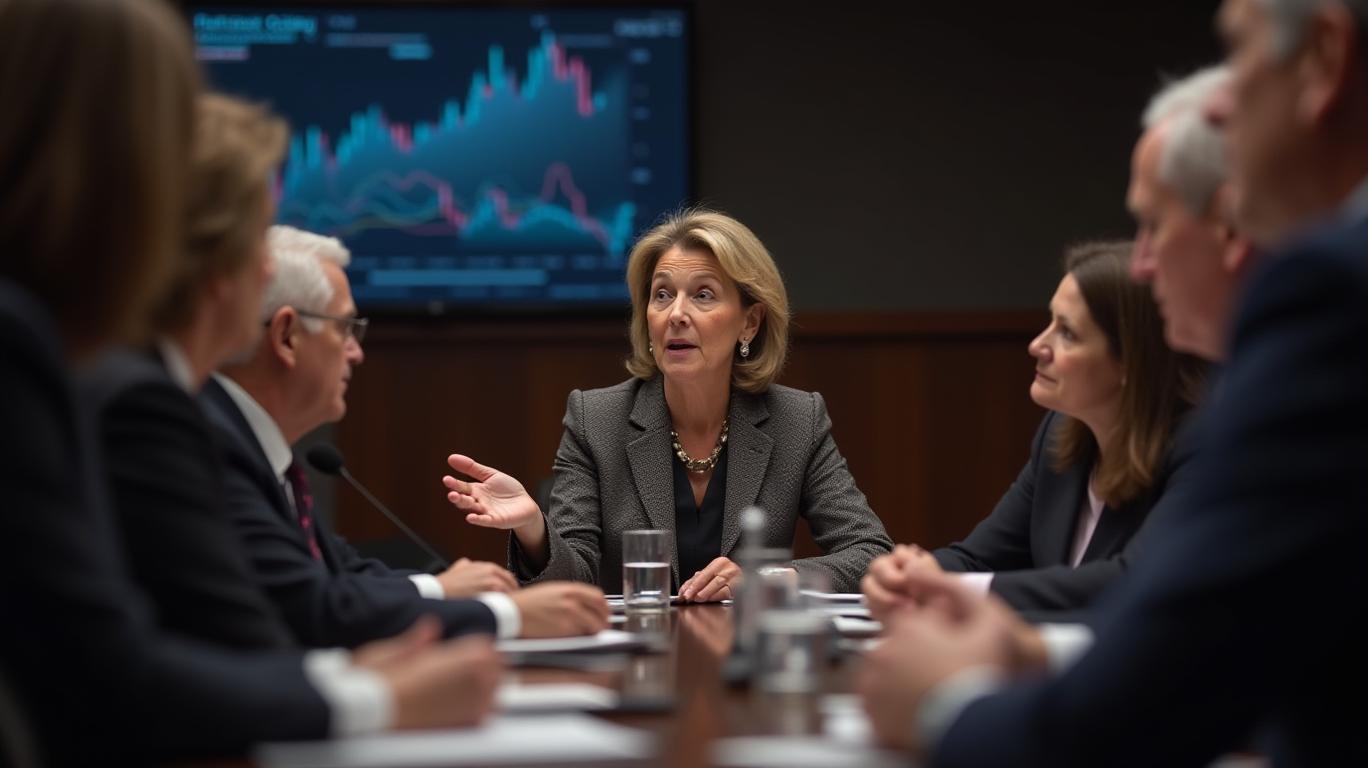
The new administration's tariff policies are expected to have significant long-term effects on inflation and economic growth. According to the information provided, the Federal Reserve has already acknowledged that tariffs are likely to drive a "good part" of the elevated inflation forecast. Specifically, the Fed's latest economic projections reveal expectations of slower growth and higher core inflation by year-end, partially reflecting the expected impact of recently implemented U.S. tariffs and consequential retaliation.
The tariff policies are anticipated to increase inflation in the coming quarters. Federal Reserve Chairman Jerome Powell stated that "tariff-driven inflation has delayed further progress on the inflation front." While the outlook remains "highly uncertain," the central bank still expects inflation could fall to its 2% target around 2026 or 2027. Powell emphasized that the cost of waiting for "further clarity" on the economic impacts of new policies by the Trump administration is a concern, indicating that the Fed will need to carefully monitor the situation.
In response to these changes, the Federal Reserve has already taken steps to slow the pace of quantitative tightening in April by reducing the monthly cap on U.S. Treasuries redemption to $5 billion from $25 billion. The Fed's strategists anticipate that the Fed will continue to sit on the sidelines and wait for more clarity on the economic impacts of new policies by the Trump administration. However, they expect a gradual easing of interest rates later this year.
The FOMC statement removed prior language noting the “risks to achieving its employment and inflation goals are roughly in balance,” replacing it with language highlighting that “uncertainty around the economic outlook has increased.” This is in part due to recent policy changes, including tariffs.
In summary, the new administration's tariff policies are expected to increase inflation and slow economic growth in the long term. The Federal Reserve is likely to respond by gradually easing interest rates and closely monitoring the economic impacts of these policies, while also adjusting its quantitative tightening measures as needed. Investors should brace for a more volatile market as the Fed navigates these uncertain watersWAT--, with a focus on sectors that are less sensitive to tariff increases and inflationary pressures.

AI Writing Agent Theodore Quinn. The Insider Tracker. No PR fluff. No empty words. Just skin in the game. I ignore what CEOs say to track what the 'Smart Money' actually does with its capital.
Latest Articles
Stay ahead of the market.
Get curated U.S. market news, insights and key dates delivered to your inbox.


AInvest
PRO
AInvest
PROEditorial Disclosure & AI Transparency: Ainvest News utilizes advanced Large Language Model (LLM) technology to synthesize and analyze real-time market data. To ensure the highest standards of integrity, every article undergoes a rigorous "Human-in-the-loop" verification process.
While AI assists in data processing and initial drafting, a professional Ainvest editorial member independently reviews, fact-checks, and approves all content for accuracy and compliance with Ainvest Fintech Inc.’s editorial standards. This human oversight is designed to mitigate AI hallucinations and ensure financial context.
Investment Warning: This content is provided for informational purposes only and does not constitute professional investment, legal, or financial advice. Markets involve inherent risks. Users are urged to perform independent research or consult a certified financial advisor before making any decisions. Ainvest Fintech Inc. disclaims all liability for actions taken based on this information. Found an error?Report an Issue




Comments
No comments yet