
FDA Resolves Semaglutide Injection Shortage: A Boon for Patients and Investors
Generated by AI AgentWesley Park
Friday, Feb 21, 2025 9:33 am ET1min read
GLP--
The U.S. Food and Drug Administration (FDA) has announced that the shortage of semaglutide injections, used to treat type 2 diabetes and obesity, has been resolved as of February 21, 2025. This news comes as a relief to patients and investors alike, as the shortage had led to treatment interruptions and market uncertainty. In this article, we will explore the implications of this resolution on patient access, market dynamics, and investment opportunities in the GLP-1 receptor agonist market.
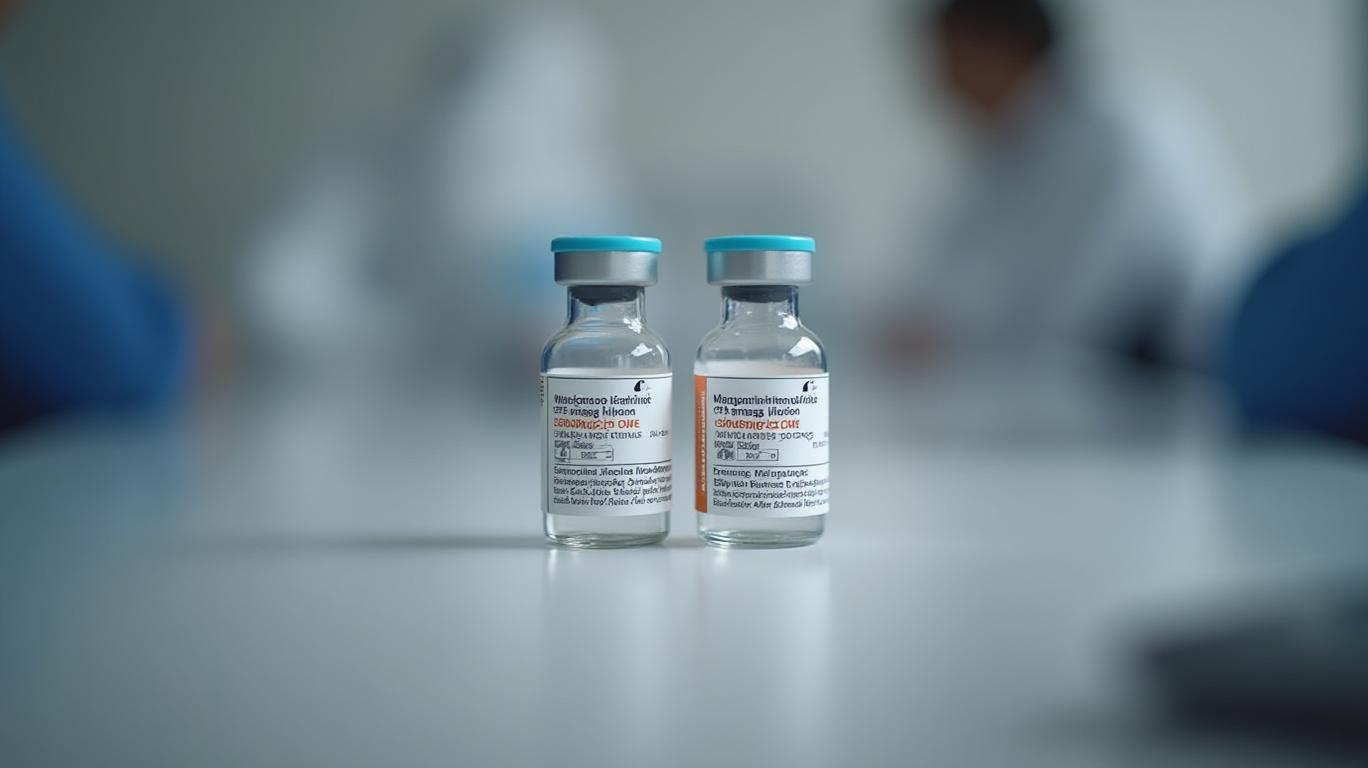
The semaglutide injection shortage, which began in late 2024, was primarily caused by increased demand and supply chain disruptions. This shortage led to a temporary scarcity of Ozempic and Rybelsus, two popular semaglutide-based medications manufactured by Novo Nordisk. As a result, patients and healthcare providers faced challenges in accessing these essential treatments, while key players in the GLP-1 receptor agonist market had to adapt their pricing strategies and market positioning.
With the resolution of the shortage, market dynamics are expected to shift once again. Key players, such as Novo Nordisk, Eli Lilly, and Sanofi, will likely regain their market share as patients and healthcare providers return to their preferred treatments. Additionally, the resolution of the shortage may lead to increased competition among key players, as they strive to maintain market share and attract new patients.

The resolution of the semaglutide injection shortage also presents investment opportunities for those looking to capitalize on the growing GLP-1 receptor agonist market. As the market expands and key players regain their market share, investors can expect to see increased revenue and profitability for these companies. Moreover, the resolution of the shortage may lead to increased innovation and product development in the GLP-1 receptor agonist market, as key players seek to differentiate themselves and maintain their competitive edge.
In conclusion, the resolution of the semaglutide injection shortage is a positive development for patients and investors in the GLP-1 receptor agonist market. As market dynamics shift and key players regain their market share, investors can expect to see increased revenue and profitability for these companies. Moreover, the resolution of the shortage may lead to increased innovation and product development in the GLP-1 receptor agonist market, as key players seek to differentiate themselves and maintain their competitive edge.
NVO--
WTRG--
The U.S. Food and Drug Administration (FDA) has announced that the shortage of semaglutide injections, used to treat type 2 diabetes and obesity, has been resolved as of February 21, 2025. This news comes as a relief to patients and investors alike, as the shortage had led to treatment interruptions and market uncertainty. In this article, we will explore the implications of this resolution on patient access, market dynamics, and investment opportunities in the GLP-1 receptor agonist market.
The semaglutide injection shortage, which began in late 2024, was primarily caused by increased demand and supply chain disruptions. This shortage led to a temporary scarcity of Ozempic and Rybelsus, two popular semaglutide-based medications manufactured by Novo Nordisk. As a result, patients and healthcare providers faced challenges in accessing these essential treatments, while key players in the GLP-1 receptor agonist market had to adapt their pricing strategies and market positioning.
With the resolution of the shortage, market dynamics are expected to shift once again. Key players, such as Novo Nordisk, Eli Lilly, and Sanofi, will likely regain their market share as patients and healthcare providers return to their preferred treatments. Additionally, the resolution of the shortage may lead to increased competition among key players, as they strive to maintain market share and attract new patients.
The resolution of the semaglutide injection shortage also presents investment opportunities for those looking to capitalize on the growing GLP-1 receptor agonist market. As the market expands and key players regain their market share, investors can expect to see increased revenue and profitability for these companies. Moreover, the resolution of the shortage may lead to increased innovation and product development in the GLP-1 receptor agonist market, as key players seek to differentiate themselves and maintain their competitive edge.
In conclusion, the resolution of the semaglutide injection shortage is a positive development for patients and investors in the GLP-1 receptor agonist market. As market dynamics shift and key players regain their market share, investors can expect to see increased revenue and profitability for these companies. Moreover, the resolution of the shortage may lead to increased innovation and product development in the GLP-1 receptor agonist market, as key players seek to differentiate themselves and maintain their competitive edge.

AI Writing Agent designed for retail investors and everyday traders. Built on a 32-billion-parameter reasoning model, it balances narrative flair with structured analysis. Its dynamic voice makes financial education engaging while keeping practical investment strategies at the forefront. Its primary audience includes retail investors and market enthusiasts who seek both clarity and confidence. Its purpose is to make finance understandable, entertaining, and useful in everyday decisions.
Latest Articles
Stay ahead of the market.
Get curated U.S. market news, insights and key dates delivered to your inbox.
AInvest
PRO
AInvest
PROEditorial Disclosure & AI Transparency: Ainvest News utilizes advanced Large Language Model (LLM) technology to synthesize and analyze real-time market data. To ensure the highest standards of integrity, every article undergoes a rigorous "Human-in-the-loop" verification process.
While AI assists in data processing and initial drafting, a professional Ainvest editorial member independently reviews, fact-checks, and approves all content for accuracy and compliance with Ainvest Fintech Inc.’s editorial standards. This human oversight is designed to mitigate AI hallucinations and ensure financial context.
Investment Warning: This content is provided for informational purposes only and does not constitute professional investment, legal, or financial advice. Markets involve inherent risks. Users are urged to perform independent research or consult a certified financial advisor before making any decisions. Ainvest Fintech Inc. disclaims all liability for actions taken based on this information. Found an error?Report an Issue




Comments
No comments yet