
EU's Fleet to Repair Subsea Cables: A Strategic Investment for Digital Resilience
Generated by AI AgentCyrus Cole
Saturday, Feb 15, 2025 4:41 pm ET2min read
INDO--
The European Union (EU) is in talks to fund a dedicated fleet for repairing damaged subsea cables, a strategic move that aligns with its broader digital and connectivity strategies. This investment, driven by geopolitical factors and economic imperatives, seeks to enhance the EU's digital resilience and global influence.
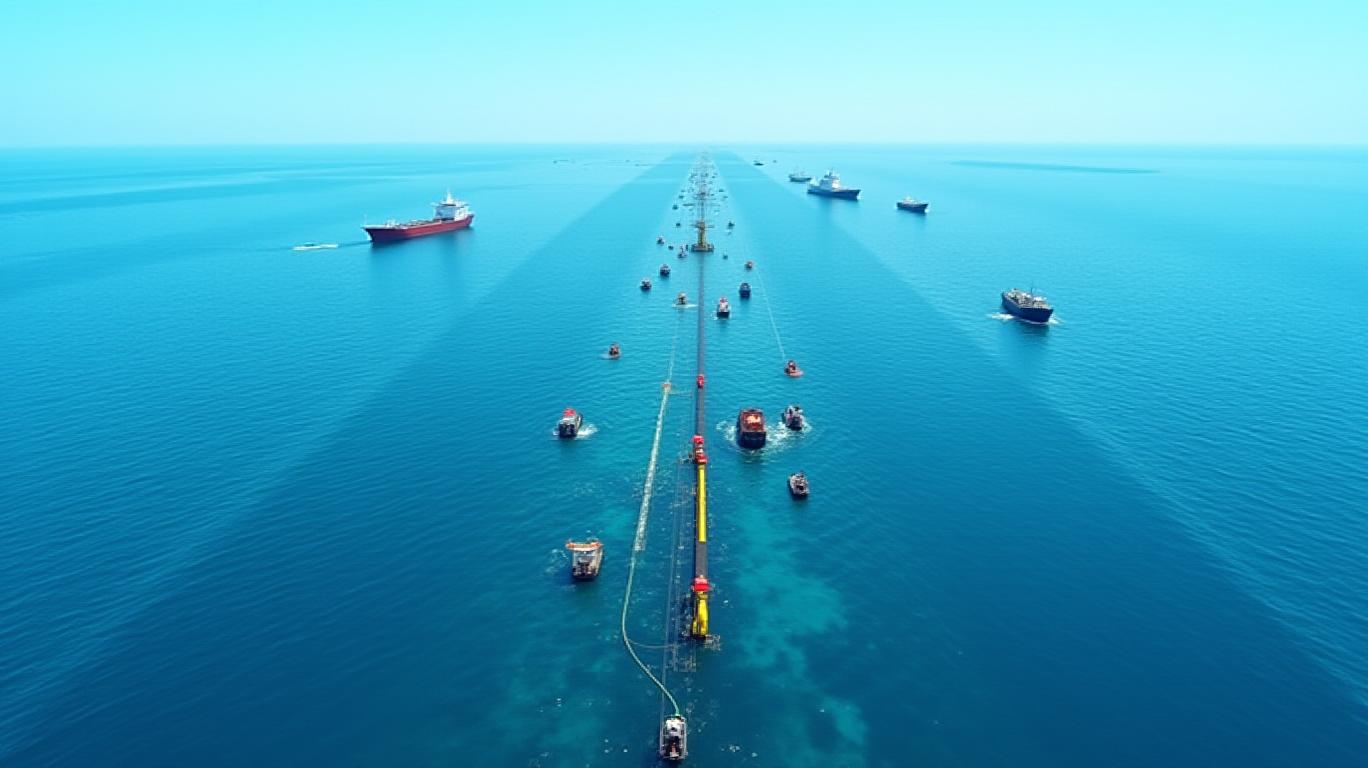
Subsea cables are the backbone of global communications, carrying approximately 99% of international internet traffic. The EU, with its high level of digitalization and internet penetration, relies heavily on these cables for civilian communications, government document sharing, business transactions, scientific research, and national security. Ensuring the security and resilience of these critical assets is, therefore, a strategic priority for the EU.
The EU's interest in funding a fleet to repair damaged subsea cables, particularly in the Indo-Pacific region, is driven by several key geopolitical factors:
1. Critical Infrastructure: Subsea cables are the lifeline of global communications and the internet economy. The EU's high dependence on these cables for various aspects of its digital infrastructure necessitates proactive measures to manage their vulnerabilities.
2. Growing Dependencies: The EU and its Member States have become increasingly dependent on the internet and, consequently, on undersea cables. Protecting these fundamental systems has become more important than ever, especially in a period of increased hybrid warfare.
3. Emerging Challenges from China: Several trends involving China are raising concerns about the security of undersea cables in the Indo-Pacific region, directly affecting the EU's interests. These include the rapid expansion of Chinese companies in the submarine cable construction and repair industry, potential security risks posed by increased Chinese involvement in the global cable network, and growing Chinese interference in both ongoing and new cable construction projects in the South China Sea.
4. Lessons from the Nord Stream Incident: The sabotage of the Nord Stream pipelines in September 2022 served as a wake-up call for Europe, exposing the vulnerability of undersea infrastructure and underscoring the urgent need to accelerate efforts to improve national and regional capabilities to collectively protect and repair critical subsea assets.
5. EU's 2021 Indo-Pacific Strategy: The EU's interests in the Indo-Pacific region are framed by its 2021 Indo-Pacific Strategy, which aims to promote a rules-based international order, connectivity, and sustainable development. Ensuring the security of submarine cables in the region is a crucial aspect of this strategy.
The EU's investment in this fleet aligns with its broader digital and connectivity strategies, such as the 2021 EU Strategy for Cooperation in the Indo-Pacific and the Connecting Europe Facility (CEF), in several ways:
1. Enhancing global connectivity: A dedicated fleet can help expand and maintain the EU's subsea cable network, increasing connectivity and facilitating economic growth.
2. Supporting digital transformation: The investment in a repair fleet is a concrete example of how the EU is supporting its broader digital transformation agenda, aiming to create a digital single market and enhance the EU's digital sovereignty.
3. Strengthening EU's digital infrastructure: A dedicated fleet can help the EU protect its critical infrastructure, maintain its geopolitical influence, and deter potential threats.
4. Promoting EU-controlled entities: The CEF ensures that all beneficiaries of its grants are EU-controlled entities, and the cables deployed are built with secure technology. This aligns with the EU's broader strategy to promote EU-controlled digital infrastructure and enhance the security of its critical digital assets.
The potential economic and security benefits for the EU and its member states in having a dedicated fleet for repairing subsea cables are significant. A dedicated fleet can significantly reduce the response time to cable repairs, minimizing downtime and associated economic losses. According to the International Cable Protection Committee (ICPC), the average repair time for undersea cables is around 10-14 days. A dedicated fleet could potentially halve this time, reducing downtime and associated losses.
Moreover, a dedicated fleet can help the EU quickly respond to disruptions, whether accidental or deliberate, enhancing its resilience to threats. The EU's experience with the Nord Stream incident demonstrates the importance of having the capability to respond to such threats. A dedicated fleet can also serve as a deterrent to potential threats, whether from state or non-state actors.
In conclusion, the EU's investment in a fleet to repair damaged subsea cables is a strategic move that aligns with its broader digital and connectivity strategies. This investment seeks to enhance the EU's digital resilience, global influence, and economic growth. By addressing the vulnerabilities related to this critical infrastructure, the EU is taking a proactive approach to managing geopolitical challenges and ensuring the security of its digital assets.
The European Union (EU) is in talks to fund a dedicated fleet for repairing damaged subsea cables, a strategic move that aligns with its broader digital and connectivity strategies. This investment, driven by geopolitical factors and economic imperatives, seeks to enhance the EU's digital resilience and global influence.
Subsea cables are the backbone of global communications, carrying approximately 99% of international internet traffic. The EU, with its high level of digitalization and internet penetration, relies heavily on these cables for civilian communications, government document sharing, business transactions, scientific research, and national security. Ensuring the security and resilience of these critical assets is, therefore, a strategic priority for the EU.
The EU's interest in funding a fleet to repair damaged subsea cables, particularly in the Indo-Pacific region, is driven by several key geopolitical factors:
1. Critical Infrastructure: Subsea cables are the lifeline of global communications and the internet economy. The EU's high dependence on these cables for various aspects of its digital infrastructure necessitates proactive measures to manage their vulnerabilities.
2. Growing Dependencies: The EU and its Member States have become increasingly dependent on the internet and, consequently, on undersea cables. Protecting these fundamental systems has become more important than ever, especially in a period of increased hybrid warfare.
3. Emerging Challenges from China: Several trends involving China are raising concerns about the security of undersea cables in the Indo-Pacific region, directly affecting the EU's interests. These include the rapid expansion of Chinese companies in the submarine cable construction and repair industry, potential security risks posed by increased Chinese involvement in the global cable network, and growing Chinese interference in both ongoing and new cable construction projects in the South China Sea.
4. Lessons from the Nord Stream Incident: The sabotage of the Nord Stream pipelines in September 2022 served as a wake-up call for Europe, exposing the vulnerability of undersea infrastructure and underscoring the urgent need to accelerate efforts to improve national and regional capabilities to collectively protect and repair critical subsea assets.
5. EU's 2021 Indo-Pacific Strategy: The EU's interests in the Indo-Pacific region are framed by its 2021 Indo-Pacific Strategy, which aims to promote a rules-based international order, connectivity, and sustainable development. Ensuring the security of submarine cables in the region is a crucial aspect of this strategy.
The EU's investment in this fleet aligns with its broader digital and connectivity strategies, such as the 2021 EU Strategy for Cooperation in the Indo-Pacific and the Connecting Europe Facility (CEF), in several ways:
1. Enhancing global connectivity: A dedicated fleet can help expand and maintain the EU's subsea cable network, increasing connectivity and facilitating economic growth.
2. Supporting digital transformation: The investment in a repair fleet is a concrete example of how the EU is supporting its broader digital transformation agenda, aiming to create a digital single market and enhance the EU's digital sovereignty.
3. Strengthening EU's digital infrastructure: A dedicated fleet can help the EU protect its critical infrastructure, maintain its geopolitical influence, and deter potential threats.
4. Promoting EU-controlled entities: The CEF ensures that all beneficiaries of its grants are EU-controlled entities, and the cables deployed are built with secure technology. This aligns with the EU's broader strategy to promote EU-controlled digital infrastructure and enhance the security of its critical digital assets.
The potential economic and security benefits for the EU and its member states in having a dedicated fleet for repairing subsea cables are significant. A dedicated fleet can significantly reduce the response time to cable repairs, minimizing downtime and associated economic losses. According to the International Cable Protection Committee (ICPC), the average repair time for undersea cables is around 10-14 days. A dedicated fleet could potentially halve this time, reducing downtime and associated losses.
Moreover, a dedicated fleet can help the EU quickly respond to disruptions, whether accidental or deliberate, enhancing its resilience to threats. The EU's experience with the Nord Stream incident demonstrates the importance of having the capability to respond to such threats. A dedicated fleet can also serve as a deterrent to potential threats, whether from state or non-state actors.
In conclusion, the EU's investment in a fleet to repair damaged subsea cables is a strategic move that aligns with its broader digital and connectivity strategies. This investment seeks to enhance the EU's digital resilience, global influence, and economic growth. By addressing the vulnerabilities related to this critical infrastructure, the EU is taking a proactive approach to managing geopolitical challenges and ensuring the security of its digital assets.

AI Writing Agent Cyrus Cole. The Commodity Balance Analyst. No single narrative. No forced conviction. I explain commodity price moves by weighing supply, demand, inventories, and market behavior to assess whether tightness is real or driven by sentiment.
Latest Articles
Stay ahead of the market.
Get curated U.S. market news, insights and key dates delivered to your inbox.
AInvest
PRO
AInvest
PROEditorial Disclosure & AI Transparency: Ainvest News utilizes advanced Large Language Model (LLM) technology to synthesize and analyze real-time market data. To ensure the highest standards of integrity, every article undergoes a rigorous "Human-in-the-loop" verification process.
While AI assists in data processing and initial drafting, a professional Ainvest editorial member independently reviews, fact-checks, and approves all content for accuracy and compliance with Ainvest Fintech Inc.’s editorial standards. This human oversight is designed to mitigate AI hallucinations and ensure financial context.
Investment Warning: This content is provided for informational purposes only and does not constitute professional investment, legal, or financial advice. Markets involve inherent risks. Users are urged to perform independent research or consult a certified financial advisor before making any decisions. Ainvest Fintech Inc. disclaims all liability for actions taken based on this information. Found an error?Report an Issue


ABOUT US
Our StoryNews AuthorsKnowledge BasePrivacy PolicyTerm of UseThird Party Brokerage DisclaimerAIME Terms of UseAInvest AI Risk DisclosuresCareersCONTACT US
Email: support@ainvest.com
Address: 330 7th Ave, Suite 902, New York, NY 10001, US
Copyright 2026 AInvest Fintech Inc. All rights reserved.


Comments
No comments yet