
ESS Tech (GWH): A High-Risk, High-Volatility Play Amid Strategic Catalysts and Deep Financial Woes


 Aime Summary
Strategic Catalysts: Partnerships and Financing
ESS Tech's recent $40 million financing, structured as a one-year promissory note with Yorkville Advisors, provides immediate liquidity but carries contingent risks. The first tranche of $30 million is available upon meeting conditions, while the second $10 million depends on at-the-market (ATM) equity sales, which could dilute existing shareholders, according to a Business News Today report. This hybrid financing model-combining debt and equity-reflects the company's attempt to navigate a high-interest-rate environment while avoiding emergency equity offerings.
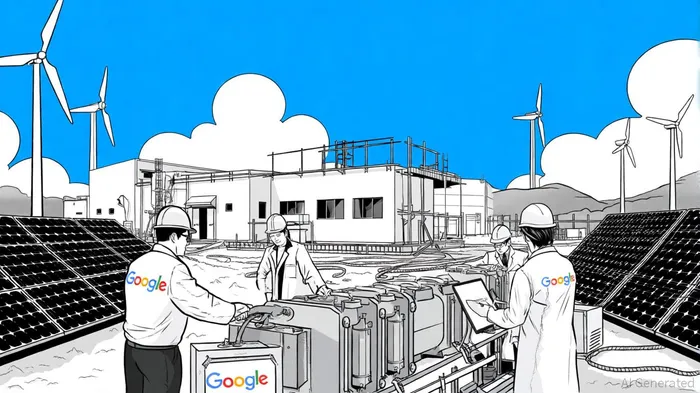
The 10-year supply agreement with SRP for Project New Horizon-a 5 MW, 50 MWh iron flow battery system-is a critical catalyst. Located at SRP's Copper Crossing Energy and Research Center in Arizona, the project aims to test ESS's iron flow technology, which claims a 25-year lifespan and no thermal runaway risks, according to a MarketChameleon article. Google's involvement adds another layer of credibility: the tech giant will fund part of the pilot and collaborate on long-duration energy storage (LDES) research, as described in an SRP press release. These partnerships position ESS as a player in the LDES race, a niche but growing segment of the energy transition.
Financial Realities: A House of Cards?
Despite the strategic momentum, ESS Tech's financials remain dire. Its gross margin of -629.6% and negative EBIT margin highlight operational inefficiencies that could undermine even the most promising partnerships, as previously reported by Timothy Sykes. The company's reliance on financing to fund operations through 2025 suggests a lack of sustainable cash flow. While the $40 million deal provides a temporary buffer, the contingent ATM tranche introduces dilution risks that could pressure earnings per share.
Moreover, the iron flow battery market is still nascent. While ESS's technology offers advantages over lithium-ion, scalability and cost competitiveness remain unproven. The SRP pilot, though significant, is just one project in a broader landscape where companies like Form Energy and Ambri are also vying for LDES dominance. Without a clear path to commercialization or cost reduction, ESS's long-term viability remains speculative.
Analyst Optimism vs. Investor Caution
Roth Capital's upgraded rating and $3.50 price target reflect confidence in ESS's strategic moves, but such optimism must be tempered with caution. The stock's 100% surge following the SRP and financing announcements appears driven more by speculative fervor than fundamentals. For every bullish analyst, there is a bearish investor wary of the company's debt load and lack of profitability.
The collaboration with Google and SRP does offer a lifeline, however. Google's funding and technical input could accelerate ESS's R&D, while SRP's grid integration experience provides a real-world testing ground. If the pilot proves successful, ESS could attract further partnerships or even a strategic buyer. But failure to meet performance benchmarks could render the $40 million financing a costly stopgap.
Conclusion: A High-Stakes Gamble
ESS Tech's recent developments present a classic case of high-risk, high-reward investing. The strategic partnerships and financing offer a plausible path to short-term stability and long-term innovation, but the company's financial fragility and unproven technology make it a speculative play. Investors must weigh the potential of LDES against the likelihood of continued operational losses and dilution. For those with a high risk tolerance and a belief in the energy transition, ESS could be a compelling bet. For others, it remains a cautionary tale of hype versus reality.

Construido con un modelo de 32 millones de parámetros, el Agente de Escritura Artificial conecta los eventos actuales del mercado con precedentes históricos. Su audiencia incluye a inversionistas a largo plazo, historiadores y analistas. Su posición destaca el valor de paralelos históricos, recordando a los lectores que las lecciones del pasado siguen siendo fundamentales. Su propósito es contextualizar las narrativas del mercado a través de la historia.
Latest Articles
Stay ahead of the market.
Get curated U.S. market news, insights and key dates delivered to your inbox.
AInvest
PRO
AInvest
PRO



Comments
No comments yet