
US Egg Prices Surge Driving CPI, May Continue to Rise
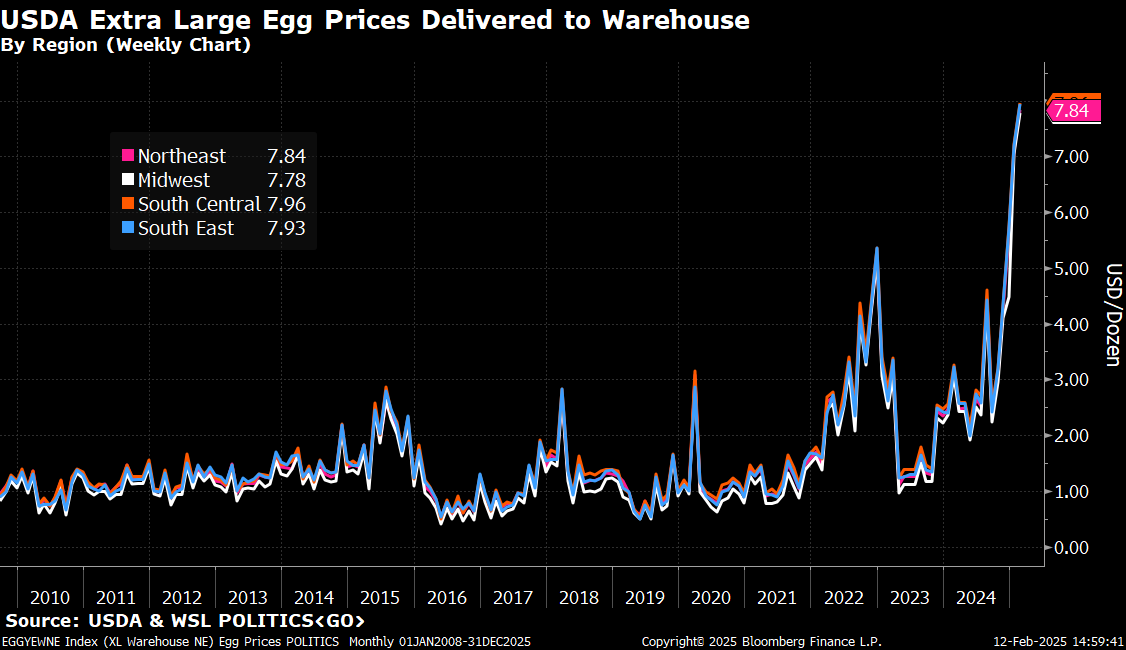
The January CPI data in the United States significantly exceeded expectations, with soaring egg prices playing a key role. The avian flu outbreak, which began in 2022, continues to persist, keeping egg prices high. Since the start of 2025, US egg prices have repeatedly hit new historical highs.
Data shows that the average price for a dozen Grade A eggs in urban areas reached $4.95 in January, breaking the previous record of $4.82 set two years ago. This is also much higher than the recent low of $2.04 in August 2023.
Of course, this is just the national average. In some areas, the price of a dozen eggs can reach $10 or more. Special varieties, such as organic and free-range eggs, are even more expensive.
Egg Prices Could Continue to Rise
Egg prices may continue to rise in the future. Every year, just before Easter, the price of eggs surges due to high demand. The US Department of Agriculture (USDA) forecasted last month that egg prices could increase by 20% this year.
Even if consumers can afford the eggs, they may find it difficult to purchase them, as some stores frequently run out of stock. Some supermarkets have even set limits on the number of eggs customers can buy at once.
Reasons for the High Egg Prices
The main reason for the high egg prices is the ongoing avian flu epidemic. When the virus is discovered on a farm, the entire flock is culled to prevent the disease from spreading. Since large egg farms often raise millions of chickens, an outbreak can severely disrupt the egg supply.
According to the USDA, more than 23 million poultry were culled last month, and in December of last year, that number exceeded 18 million. These figures include turkeys and broilers, but the vast majority are egg-laying hens.
In addition, egg farmers are facing higher costs for feed, fuel, and labor due to inflation. Farmers are also investing more in biosecurity measures to protect their flocks.
Impact of Legislation on Egg Supply
Currently, 10 states have passed laws requiring that only eggs from free-range environments be sold. These eggs are already in short supply and are concentrated in specific areas, meaning that when avian flu affects free-range egg farms, the price fluctuations may be even more severe.
Many of the egg farms affected by the outbreak are located in California, where the free-range egg regulations are already in effect. Other states, including Massachusetts, Nevada, Washington, Oregon, Colorado, and Michigan, have also implemented similar regulations.

Stay ahead of the market.
Get curated U.S. market news, insights and key dates delivered to your inbox.




Comments
No comments yet