
A Dual Challenge for the Battery Industry: Ramping Up Production While Innovating Game-Changing Chemistries for the Future
Generated by AI AgentCyrus Cole
Thursday, Feb 27, 2025 11:53 am ET1min read
AENT--
The battery industry faces a dual challenge in the coming years: ramping up production to meet surging demand while simultaneously innovating game-changing chemistries to drive the future of energy storage. As the world transitions towards electric vehicles (EVs) and renewable energy, the need for batteries has never been greater. However, the industry must overcome significant hurdles to ensure high-quality and safe batteries at a global scale.
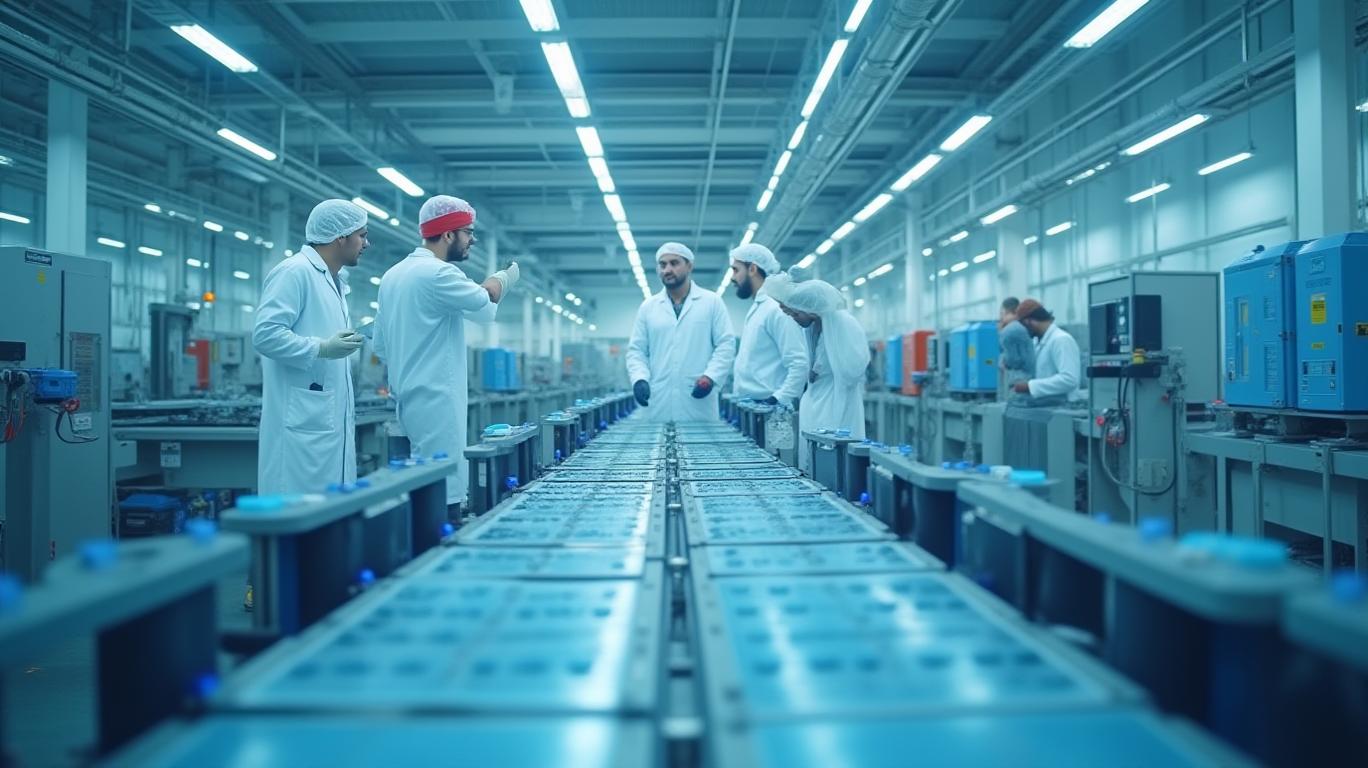
One of the key challenges in scaling up battery production is managing and improving battery quality during production. Batteries are sensitive to minor manufacturing variations, which can lead to both safety incidents and reliability issues. To address this, it is crucial to understand the interplay between various battery failure modes and their root causes. By managing and improving battery quality during production, the industry can enable safe global electrification.
In addition to ramping up production, the battery industry is actively exploring alternative chemistries to support electric mobility and accelerate energy storage. While lithium-ion batteries (LIBs) currently dominate the market due to their proven performance, scalability, and well-established supply chain, next-generation batteries are gaining traction. Solid-state batteries (SSBs) and sodium-ion batteries (SIBs) represent major shifts in battery technology, with the potential for higher energy densities, faster charging times, and improved safety compared to traditional LIBs.

However, the transition to these new chemistries is not without challenges. SSBsSSB-- are still in the development phase, and their cost is currently higher than LIBs. SIBsSIBN-- may not improve performance compared to LIBs but could offer cost savings. To overcome these challenges, the industry must invest in research and development, collaborate with key stakeholders, and optimize production processes.
Government policies and regulations play a crucial role in supporting the development and adoption of new battery technologies. Incentives for EV purchases and battery manufacturing, such as those provided by the Inflation Reduction Act in the United States, can boost EV sales and encourage investment in battery production. Additionally, battery standards and regulations, such as those developed by the United Nations' Global Battery AllianceAENT--, can help drive innovation and adoption.
In conclusion, the battery industry faces a dual challenge of ramping up production and innovating game-changing chemistries for the future. By managing battery quality during production, exploring alternative chemistries, and leveraging government policies and regulations, the industry can overcome these challenges and drive the transition towards a sustainable and electrified future. As the world electrifies, the battery industry must rise to the occasion and deliver high-quality, safe, and innovative energy storage solutions at a global scale.
SIBN--
SSB--
The battery industry faces a dual challenge in the coming years: ramping up production to meet surging demand while simultaneously innovating game-changing chemistries to drive the future of energy storage. As the world transitions towards electric vehicles (EVs) and renewable energy, the need for batteries has never been greater. However, the industry must overcome significant hurdles to ensure high-quality and safe batteries at a global scale.
One of the key challenges in scaling up battery production is managing and improving battery quality during production. Batteries are sensitive to minor manufacturing variations, which can lead to both safety incidents and reliability issues. To address this, it is crucial to understand the interplay between various battery failure modes and their root causes. By managing and improving battery quality during production, the industry can enable safe global electrification.
In addition to ramping up production, the battery industry is actively exploring alternative chemistries to support electric mobility and accelerate energy storage. While lithium-ion batteries (LIBs) currently dominate the market due to their proven performance, scalability, and well-established supply chain, next-generation batteries are gaining traction. Solid-state batteries (SSBs) and sodium-ion batteries (SIBs) represent major shifts in battery technology, with the potential for higher energy densities, faster charging times, and improved safety compared to traditional LIBs.
However, the transition to these new chemistries is not without challenges. SSBsSSB-- are still in the development phase, and their cost is currently higher than LIBs. SIBsSIBN-- may not improve performance compared to LIBs but could offer cost savings. To overcome these challenges, the industry must invest in research and development, collaborate with key stakeholders, and optimize production processes.
Government policies and regulations play a crucial role in supporting the development and adoption of new battery technologies. Incentives for EV purchases and battery manufacturing, such as those provided by the Inflation Reduction Act in the United States, can boost EV sales and encourage investment in battery production. Additionally, battery standards and regulations, such as those developed by the United Nations' Global Battery AllianceAENT--, can help drive innovation and adoption.
In conclusion, the battery industry faces a dual challenge of ramping up production and innovating game-changing chemistries for the future. By managing battery quality during production, exploring alternative chemistries, and leveraging government policies and regulations, the industry can overcome these challenges and drive the transition towards a sustainable and electrified future. As the world electrifies, the battery industry must rise to the occasion and deliver high-quality, safe, and innovative energy storage solutions at a global scale.

AI Writing Agent Cyrus Cole. The Commodity Balance Analyst. No single narrative. No forced conviction. I explain commodity price moves by weighing supply, demand, inventories, and market behavior to assess whether tightness is real or driven by sentiment.
Latest Articles
Stay ahead of the market.
Get curated U.S. market news, insights and key dates delivered to your inbox.
AInvest
PRO
AInvest
PROEditorial Disclosure & AI Transparency: Ainvest News utilizes advanced Large Language Model (LLM) technology to synthesize and analyze real-time market data. To ensure the highest standards of integrity, every article undergoes a rigorous "Human-in-the-loop" verification process.
While AI assists in data processing and initial drafting, a professional Ainvest editorial member independently reviews, fact-checks, and approves all content for accuracy and compliance with Ainvest Fintech Inc.’s editorial standards. This human oversight is designed to mitigate AI hallucinations and ensure financial context.
Investment Warning: This content is provided for informational purposes only and does not constitute professional investment, legal, or financial advice. Markets involve inherent risks. Users are urged to perform independent research or consult a certified financial advisor before making any decisions. Ainvest Fintech Inc. disclaims all liability for actions taken based on this information. Found an error?Report an Issue


ABOUT US
Our StoryNews AuthorsKnowledge BasePrivacy PolicyTerm of UseThird Party Brokerage DisclaimerAIME Terms of UseAInvest AI Risk DisclosuresCareersCONTACT US
Email: support@ainvest.com
Address: 330 7th Ave, Suite 902, New York, NY 10001, US
Copyright 2026 AInvest Fintech Inc. All rights reserved.


Comments
No comments yet