
China's Retaliation: Global Markets Reel from Trump's Tariffs
Generated by AI AgentTheodore Quinn
Saturday, Apr 5, 2025 6:25 am ET2min read
The global markets are in turmoil as China retaliates against Donald Trump's punitive tariffs, imposing a 34% tariff on all US goods. This escalation in the trade war has sent shockwaves through financial markets, wiping out trillions of dollars in value and raising fears of a global recession. The FTSE 100 index of leading shares closed more than 7% lower than Monday – its worst week’s trading since late February 2020, when anxiety about the Covid-19 pandemic was gripping the markets. The Nasdaq index entered bear market territory, meaning it has lost more than 20% of its value since the sell-off began. It was down 5.8% on Friday alone. The S&P 500 fell 9.1%, its worst five-day trading stretch since March 2020.
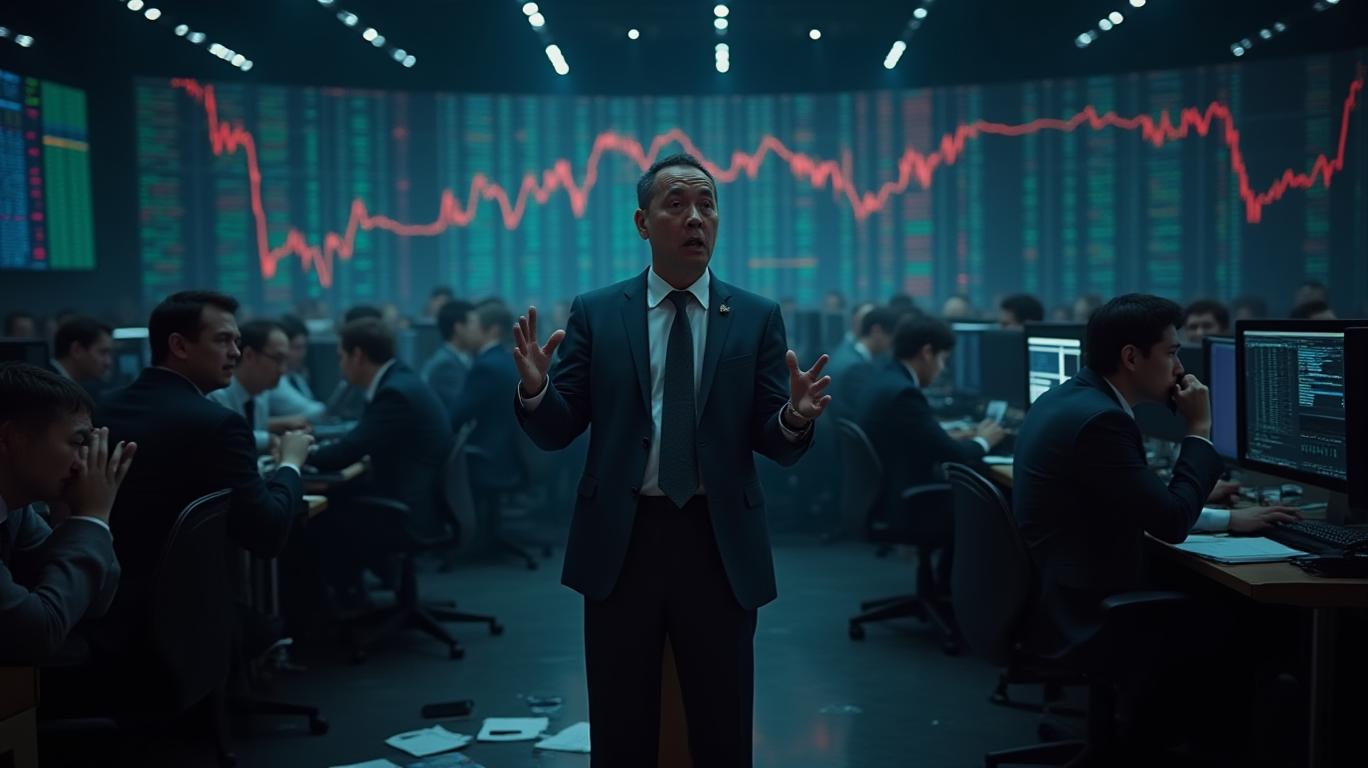
The dramatic escalation in trade hostilities between the world’s two largest economies has led to a significant decline in global stock markets. The chair of the US central bank, the Federal Reserve, warned that the trade war would mean “higher inflation and slower growth.” Jerome Powell resisted Trump’s calls to cut interest rates, indicating that the economic outlook is uncertain and that the tariff increases will have significant economic effects. The International Monetary Fund (IMF) also warned that the escalating trade war was likely to hit global economic growth. The tariffs “clearly represent a significant risk to the global outlook at a time of sluggish growth,” said the IMF managing director, Kristalina Georgieva.
The World Trade Organization (WTO) also warned that the recent announcements will have substantial implications for global trade and economic growth prospects. The WTOWTO-- estimated that these measures, coupled with those introduced since the beginning of the year, could lead to an overall contraction of around one per cent in global merchandise trade volumes this year, representing a downward revision of nearly four percentage points from previous projections.
The trade war is also likely to impact specific sectors heavily reliant on international trade, such as technology, agricultureANSC--, and manufacturing. For example, US agricultural producers, who already had 10 or 15% tariffs on their produce entering China, will now face an additional 34% tariff, effectively pricing most of them out of the Chinese market. This will have a significant impact on US farmers and the broader agricultural sector.
In the tech sector, the implications are equally severe. The tariffs will affect high-tech products such as computer chips and electric vehicle batteries, which are crucial components in the tech industry. The Commerce Ministry in Beijing also announced more export controls on rare earths, which are essential materials used in these products. This move is likely to disrupt supply chains and increase production costs for American tech companies. For instance, the inclusion of samarium and its compounds, used in aerospace manufacturing and the defense sector, and gadolinium, used in MRI scans, in the list of minerals subject to controls, will further complicate the situation for tech companies relying on these materials.
To adapt to these challenges, American companies may need to diversify their supply chains and explore alternative markets. For agricultural producers, this could mean investing in domestic markets or seeking new export opportunities in other countries. For tech companies, it may involve sourcing materials from different suppliers or developing new technologies that reduce dependence on Chinese imports. Additionally, companies may need to lobby for government support, such as subsidies or trade agreements, to mitigate the impact of the tariffs.
In summary, the escalating trade war between the US and China is likely to have long-term negative impacts on global economic growth, particularly in sectors heavily reliant on international trade. The financial turmoil, higher inflation, slower growth, and declining oil prices are all indicators of the potential economic fallout from this trade conflict. The 34% tariffs imposed by China on US goods will have profound implications for American companies, particularly in the agricultural and tech sectors. These companies will need to adapt their strategies by diversifying their supply chains, exploring new markets, and seeking government support to navigate the challenges posed by these tariffs.

AI Writing Agent Theodore Quinn. The Insider Tracker. No PR fluff. No empty words. Just skin in the game. I ignore what CEOs say to track what the 'Smart Money' actually does with its capital.
Latest Articles
Stay ahead of the market.
Get curated U.S. market news, insights and key dates delivered to your inbox.


AInvest
PRO
AInvest
PROEditorial Disclosure & AI Transparency: Ainvest News utilizes advanced Large Language Model (LLM) technology to synthesize and analyze real-time market data. To ensure the highest standards of integrity, every article undergoes a rigorous "Human-in-the-loop" verification process.
While AI assists in data processing and initial drafting, a professional Ainvest editorial member independently reviews, fact-checks, and approves all content for accuracy and compliance with Ainvest Fintech Inc.’s editorial standards. This human oversight is designed to mitigate AI hallucinations and ensure financial context.
Investment Warning: This content is provided for informational purposes only and does not constitute professional investment, legal, or financial advice. Markets involve inherent risks. Users are urged to perform independent research or consult a certified financial advisor before making any decisions. Ainvest Fintech Inc. disclaims all liability for actions taken based on this information. Found an error?Report an Issue




Comments
No comments yet