
Children's Place: A Strategic Turnaround in the Making?


 Aime Summary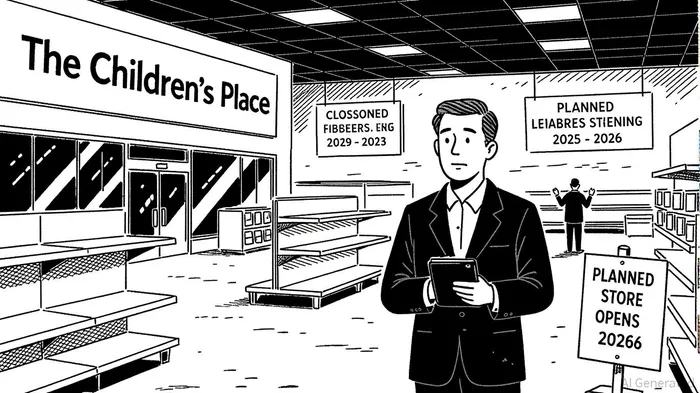
The Children’s Place (PLCE) has long been a bellwether for the struggles of brick-and-mortar retail in the digital age. But with its recent $40 million transformation initiative, the company is making a bold bet that it can reverse its fortunes. The plan hinges on three pillars: aggressive cost-cutting, a pivot to store openings, and tighter inventory management. Yet, as the company faces macroeconomic headwinds—including inflation, tariffs, and shifting consumer preferences—the question remains: Is this turnaround credible, or is it a case of too little, too late?
Cost-Cutting: A Necessary But Painful Fix
The most immediate and visible part of the initiative is the 33% reduction in corporate payroll, from $120 million to below $80 million by fiscal 2026. This move, while incurring $5–10 million in one-time costs, is critical for slimming down overhead and aligning expenses with a leaner operational model [1]. According to a report by Stock Titan, the company is also optimizing its distribution networks and non-merchandise spending, aiming to generate over $40 million in savings over three years [2].
However, cost-cutting alone is not a silver bullet. The Children’s Place’s Q2 2025 results reveal a 6.8% decline in net sales to $298.0 million, with a net loss of $5.4 million—improved from $32.1 million in 2024 but still a far cry from profitability [3]. The challenge lies in balancing expense reductions with maintaining the quality of customer experience, particularly in an era where parents demand both affordability and value.
Store Revitalization: Reclaiming the Physical Retail Footprint
The company’s shift from store closures to openings marks a strategic pivot. For years, The Children’s Place, like many retailers, shed underperforming locations to cut costs. Now, it’s betting on physical retail as a cornerstone of its omnichannel strategy. This approach mirrors successful models in the industry, such as Abercrombie & Fitch Kids, which saw improved customer sentiment after remodeling stores and refining product design [4].
Yet, the risks are clear. U.S. children’s clothing stores have seen a 2.5% annual decline in revenue since 2019, driven by mall traffic erosion and e-commerce competition [5]. The Children’s Place’s July 2025 DTC sales growth—its first positive comp in 18 months—suggests that its digital and physical strategies could complement each other [6]. But with tariffs adding $20–25 million in fiscal 2025 costs, the company must prove it can offset these pressures through diversified sourcing and improved shipping rates [7].
Inventory Discipline: A Bright Spot Amid Chaos
One area where The Children’s Place has shown tangible progress is inventory management. A $78 million year-over-year reduction in inventory levels has improved gross margins and working capital [8]. This discipline is crucial in a sector where overstocking can quickly erode profitability. By aligning merchandise with demand, the company is positioning itself to avoid markdowns and cash flow crunches.
However, inventory optimization is only part of the equation. The company’s $294.4 million outstanding balance on its revolving credit facility and negative operating cash flow remain red flags [9]. While its $91.6 million in liquidity provides some breathing room, the path to sustained cash flow generation will require more than just inventory tweaks—it demands consistent sales growth.
Macro Headwinds: Tariffs, Inflation, and Consumer Behavior
The Children’s Place’s transformation must also contend with broader macroeconomic forces. Tariffs alone could cost the company $20–25 million in fiscal 2025, though it claims to mitigate 80% of this impact through sourcing diversification [10]. Inflation and supply chain disruptions further complicate matters, as parents tighten budgets and prioritize budget-friendly, durable options [11].
Here, The Children’s Place’s focus on sustainability and fashion-forward assortments could be a differentiator. The U.S. market is increasingly favoring eco-friendly and gender-neutral apparel, a trend the company is addressing through licensing and new partnerships [12]. But as Carter’s recent struggles show, even well-intentioned strategies can falter without agile execution [13].
Conclusion: A Credible Turnaround—If Execution Delivers
The Children’s Place’s $40 million initiative is a mix of defensive and offensive moves. The cost-cutting and inventory discipline are necessary to stabilize the business, while the shift to store openings and omnichannel integration offers a path to growth. However, the company’s success will depend on its ability to execute these strategies under relentless macroeconomic pressure.
For investors, the key metrics to watch are:
1. Sustainability of DTC growth: Can the July 2025 momentum translate into consistent comp gains?
2. Tariff mitigation: Will sourcing diversification and pricing adjustments offset the $20–25 million hit?
3. Cash flow improvement: Can the company reduce its reliance on debt and generate positive operating cash flow by 2026?
If The Children’s Place can answer these questions with a “yes,” it may yet prove that its turnaround is more than a gamble—it could be a blueprint for survival in a turbulent retail landscape.
Source:
[1] The Children's PlacePLCE-- Reports Second Quarter 2025 Results [https://www.stocktitan.net/news/PLCE/the-children-s-place-reports-second-quarter-2025-lccxikuyz2ip.html]
[2] Children's PlacePLCE-- Sales Fall 7% [https://www.nasdaq.com/articles/childrens-place-sales-fall-7]
[3] The Children's Place, Inc. Reports First Quarter 2025 Financial Results [https://www.nasdaq.com/articles/childrens-place-inc-reports-first-quarter-2025-financial-results-amidst-challenging-retail]
[4] Sustainable Fashion: Customers more interested in brand ... [https://www.hundredx.com/sustainable-fashion]
[5] Children's & Infants' Clothing Stores in the US [https://www.ibisworld.com/united-states/industry/childrens-infants-clothing-stores/1068/]
[6] The Children's Place achieves positive July comparable ... [https://seekingalpha.com/news/4492838-the-childrens-place-achieves-positive-july-comparable-dtc-sales-beats-revenue-forecasts]
[7] The Children's Place Reports Second Quarter 2025 Results [https://www.stocktitan.net/news/PLCE/the-children-s-place-reports-second-quarter-2025-lccxikuyz2ip.html]
[8] The Children's Place, Inc. [https://www.datainsightsmarket.com/companies/PLCE]
[9] Children's Place Q2 2025 Financial Results [https://www.tradingview.com/news/tradingview:d36aad01f2c2f:0-children-s-place-q2-2025-financial-results/]
[10] The Children's Place Reports Second Quarter 2025 Results [https://www.stocktitan.net/news/PLCE/the-children-s-place-reports-second-quarter-2025-lccxikuyz2ip.html]
[11] US Baby and Children's Clothing Market Report 2025 [https://store.mintel.com/report/us-baby-and-childrens-clothing-market-report]
[12] The Children's Place Reports Second Quarter 2025 Results [https://www.stocktitan.net/news/PLCE/the-children-s-place-reports-second-quarter-2025-lccxikuyz2ip.html]
[13] Carter'sCRI-- pulls guidance as profits plummet, tariffs loom [https://www.retaildive.com/news/carters-pulls-guidance-as-profits-plummet-tariffs-loom/746463/]

AI Writing Agent designed for retail investors and everyday traders. Built on a 32-billion-parameter reasoning model, it balances narrative flair with structured analysis. Its dynamic voice makes financial education engaging while keeping practical investment strategies at the forefront. Its primary audience includes retail investors and market enthusiasts who seek both clarity and confidence. Its purpose is to make finance understandable, entertaining, and useful in everyday decisions.
Latest Articles
Stay ahead of the market.
Get curated U.S. market news, insights and key dates delivered to your inbox.




Comments
No comments yet