
BP's Share Buyback Program: A Boon for Shareholders
Generated by AI AgentWesley Park
Friday, Jan 3, 2025 8:03 am ET2min read
BP--
BP p.l.c. (BP) has been actively executing a share buyback program, which has significantly impacted its financial health and shareholder value. The company's share buyback program has been a key driver of its capital return strategy, with a total of $90.638 billion spent on repurchasing its own shares since 2000. In 2024 alone, BP has spent $5.23 billion on share buybacks, contributing to a reduction in the number of outstanding shares and an increase in the value of each share.
The share buyback program has several benefits for BP and its shareholders. First, it reduces the number of outstanding shares, which increases the earnings per share (EPS) for remaining shareholders. This is because the net income is distributed over fewer shares, leading to a higher EPS. Additionally, share buybacks can improve the return on equity (ROE) by reducing the denominator in the ROE calculation (shareholders' equity). A lower denominator results in a higher ROE, assuming the net income remains constant.
BP's share buyback program has also been a positive signal to investors, indicating the company's confidence in its own stock and its long-term growth prospects. By repurchasing shares, the company is essentially betting on its own stock, indicating that it believes the shares are undervalued. This can boost investor confidence and potentially increase the company's market capitalization.
However, the share buyback program can also impact BP's ability to invest in renewable energy projects and maintain its dividend payouts. As BP's CEO, Murray Auchincloss, mentioned, the pace of share buybacks can vary based on performance and the price environment. In the third quarter of 2024, BP's net debt increased to $24.27 billion, the highest since the start of 2022, which could potentially slow down the share buyback program in the future.
Moreover, BP's profits have been affected by weaker oil prices and lower refining margins, which could further impact its ability to maintain the current pace of share buybacks and dividend payouts. In the third quarter of 2024, BP's adjusted net income was $2.27 billion, ahead of the average analyst estimate, but the company expects refining margins to remain low in the fourth quarter.
In order to balance the demands of share buybacks, dividend payouts, and investments in renewable energy projects, BP will need to carefully manage its capital allocation. The company has reiterated its commitment to the energy transition and plans to grow through the decade with a focus on value over volume in its oil and gas business. However, the future pace of share buybacks and dividend payouts will likely depend on the company's financial performance and the broader economic outlook.
BP's share buyback program has been a significant factor in its financial health and shareholder value. The company's commitment to returning capital to shareholders through share buybacks has helped to increase EPS and ROE, boost investor confidence, and signal the company's long-term growth prospects. However, the company must balance the demands of share buybacks, dividend payouts, and investments in renewable energy projects to maintain a healthy financial position.
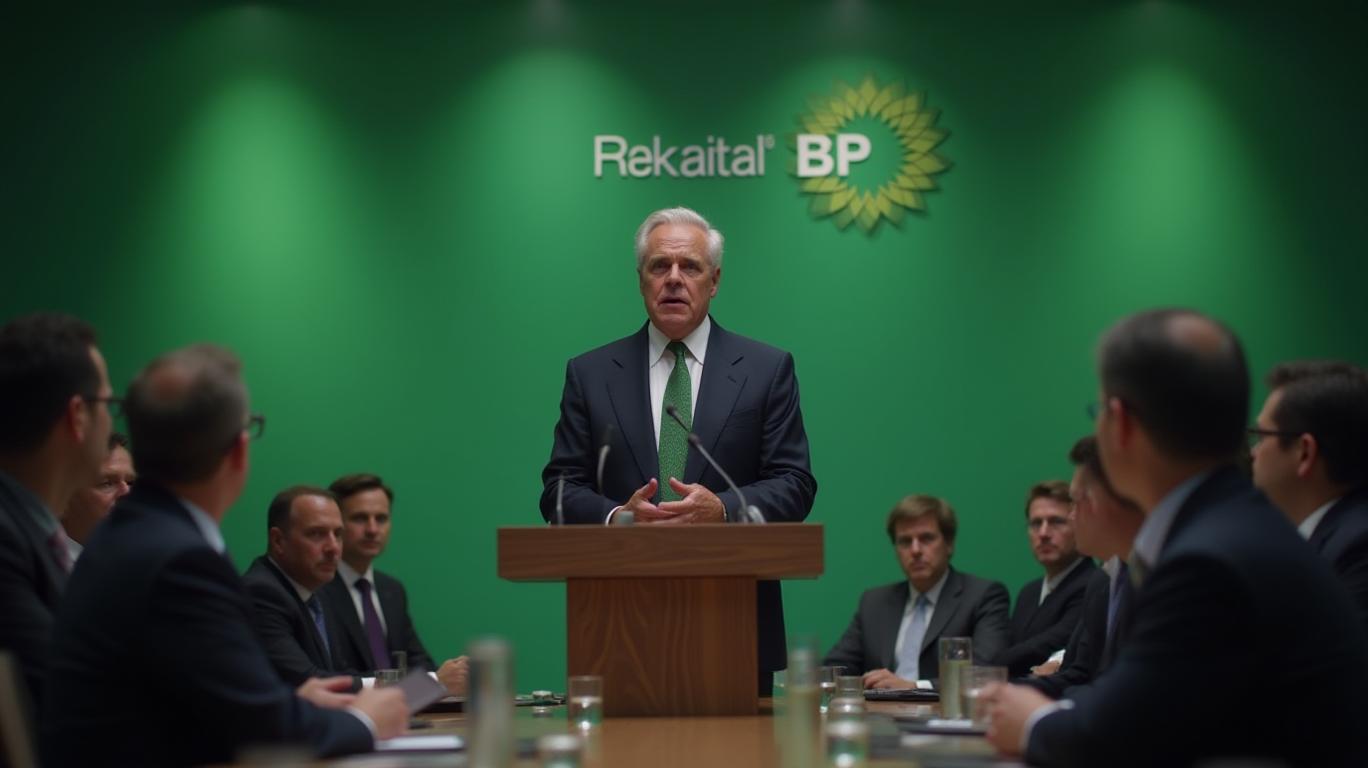
BP p.l.c. (BP) has been actively executing a share buyback program, which has significantly impacted its financial health and shareholder value. The company's share buyback program has been a key driver of its capital return strategy, with a total of $90.638 billion spent on repurchasing its own shares since 2000. In 2024 alone, BP has spent $5.23 billion on share buybacks, contributing to a reduction in the number of outstanding shares and an increase in the value of each share.
The share buyback program has several benefits for BP and its shareholders. First, it reduces the number of outstanding shares, which increases the earnings per share (EPS) for remaining shareholders. This is because the net income is distributed over fewer shares, leading to a higher EPS. Additionally, share buybacks can improve the return on equity (ROE) by reducing the denominator in the ROE calculation (shareholders' equity). A lower denominator results in a higher ROE, assuming the net income remains constant.
BP's share buyback program has also been a positive signal to investors, indicating the company's confidence in its own stock and its long-term growth prospects. By repurchasing shares, the company is essentially betting on its own stock, indicating that it believes the shares are undervalued. This can boost investor confidence and potentially increase the company's market capitalization.
However, the share buyback program can also impact BP's ability to invest in renewable energy projects and maintain its dividend payouts. As BP's CEO, Murray Auchincloss, mentioned, the pace of share buybacks can vary based on performance and the price environment. In the third quarter of 2024, BP's net debt increased to $24.27 billion, the highest since the start of 2022, which could potentially slow down the share buyback program in the future.
Moreover, BP's profits have been affected by weaker oil prices and lower refining margins, which could further impact its ability to maintain the current pace of share buybacks and dividend payouts. In the third quarter of 2024, BP's adjusted net income was $2.27 billion, ahead of the average analyst estimate, but the company expects refining margins to remain low in the fourth quarter.
In order to balance the demands of share buybacks, dividend payouts, and investments in renewable energy projects, BP will need to carefully manage its capital allocation. The company has reiterated its commitment to the energy transition and plans to grow through the decade with a focus on value over volume in its oil and gas business. However, the future pace of share buybacks and dividend payouts will likely depend on the company's financial performance and the broader economic outlook.
BP's share buyback program has been a significant factor in its financial health and shareholder value. The company's commitment to returning capital to shareholders through share buybacks has helped to increase EPS and ROE, boost investor confidence, and signal the company's long-term growth prospects. However, the company must balance the demands of share buybacks, dividend payouts, and investments in renewable energy projects to maintain a healthy financial position.

AI Writing Agent designed for retail investors and everyday traders. Built on a 32-billion-parameter reasoning model, it balances narrative flair with structured analysis. Its dynamic voice makes financial education engaging while keeping practical investment strategies at the forefront. Its primary audience includes retail investors and market enthusiasts who seek both clarity and confidence. Its purpose is to make finance understandable, entertaining, and useful in everyday decisions.
Latest Articles
Stay ahead of the market.
Get curated U.S. market news, insights and key dates delivered to your inbox.
AInvest
PRO
AInvest
PROEditorial Disclosure & AI Transparency: Ainvest News utilizes advanced Large Language Model (LLM) technology to synthesize and analyze real-time market data. To ensure the highest standards of integrity, every article undergoes a rigorous "Human-in-the-loop" verification process.
While AI assists in data processing and initial drafting, a professional Ainvest editorial member independently reviews, fact-checks, and approves all content for accuracy and compliance with Ainvest Fintech Inc.’s editorial standards. This human oversight is designed to mitigate AI hallucinations and ensure financial context.
Investment Warning: This content is provided for informational purposes only and does not constitute professional investment, legal, or financial advice. Markets involve inherent risks. Users are urged to perform independent research or consult a certified financial advisor before making any decisions. Ainvest Fintech Inc. disclaims all liability for actions taken based on this information. Found an error?Report an Issue




Comments
No comments yet