
"Asian Stocks to Track Wall Street Lower Before Fed: Markets Wrap"
Generated by AI AgentTheodore Quinn
Tuesday, Mar 18, 2025 7:14 pm ET2min read
MSFT--
Asian stocks are poised to follow Wall Street lower ahead of the Federal Reserve's upcoming decisions, as global markets grapple with a mix of economic uncertainties and technological disruptions. The recent surge of DeepSeek, a Chinese AI startup, has sent shockwaves through the tech sector, challenging the dominance of U.S. giants like NvidiaNVDA--. This, coupled with escalating trade tensions and the looming threat of a "Trumprecession," has created a perfect storm of volatility and investor anxiety.
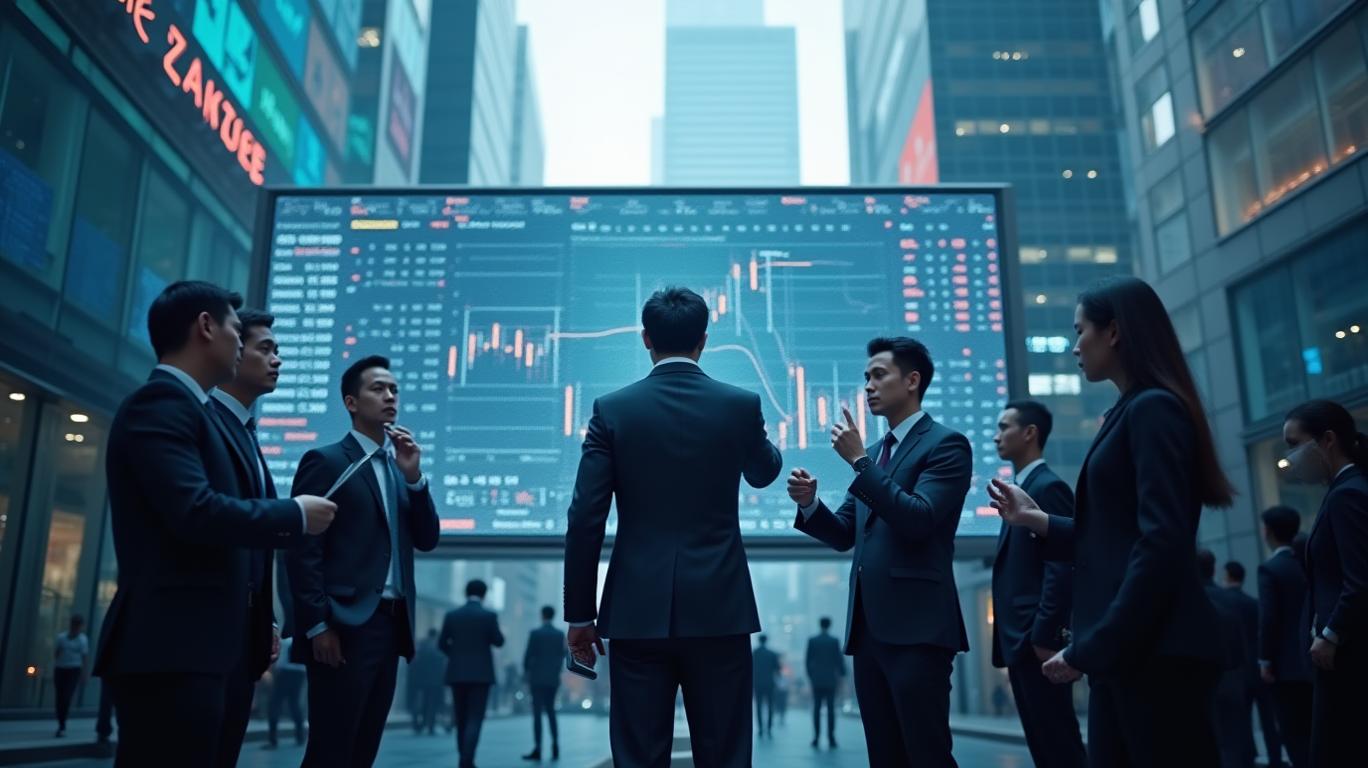
The correlation between Asian stocks and Wall Street has never been more evident. The Dow Jones, Nasdaq, and S&P 500 have all experienced significant declines, with the Nasdaq Composite dropping over 10% from its December high. This sell-off has had a ripple effect on Asian markets, where indices like the Nikkei 225 and Hang Seng Index have also seen sharp declines. The interconnectedness of global markets means that what happens on Wall Street often sets the tone for the rest of the world.
One of the key drivers of this downward trend is the rise of DeepSeek. The Chinese startup has quickly become the most downloaded app on the U.S. App Store, surpassing even ChatGPT. Its efficient AI model has raised concerns about the need for significant capital investments in AI infrastructure, leading to a sell-off in tech stocks. Nvidia, for instance, has seen its stock price drop by nearly 10% in pre-market trading, while other big tech companies like MicrosoftMSFT-- and Alphabet have also taken a hit.
The escalating trade tensions between the U.S. and China are another major factor contributing to market volatility. The U.S. has imposed tariffs on goods from China, Canada, and Mexico, leading to retaliatory measures from these countries. This has created uncertainty in global markets, as investors worry about the potential impact on trade and economic growth. The recent announcement by President Trump of additional tariffs on agricultural products has only added to the uncertainty, with the potential for further escalation looming large.
The upcoming decisions by the Federal Reserve will also play a crucial role in shaping the performance of Asian stocks. The Fed's actions, particularly regarding interest rates, can influence global financial markets. A dovish stance by the Fed could boost investor confidence and drive up stock prices in Asia, while a hawkish stance could lead to increased volatility and uncertainty.
Investors can mitigate potential risks by diversifying their portfolios, employing hedging strategies, and closely monitoring economic indicators. Diversification helps spread risk across different asset classes and regions, while hedging strategies can protect against adverse currency movements. Keeping a close eyeEYE-- on economic indicators, both in the U.S. and in Asia, can help investors anticipate the Fed's decisions and adjust their portfolios accordingly.
In conclusion, the current downward trend in Asian stocks is driven by a combination of factors, including the rise of DeepSeek, escalating trade tensions, and the upcoming decisions by the Federal Reserve. While the outlook remains uncertain, investors can take steps to mitigate potential risks and position their portfolios for success in a volatile market environment.
NVDA--
Asian stocks are poised to follow Wall Street lower ahead of the Federal Reserve's upcoming decisions, as global markets grapple with a mix of economic uncertainties and technological disruptions. The recent surge of DeepSeek, a Chinese AI startup, has sent shockwaves through the tech sector, challenging the dominance of U.S. giants like NvidiaNVDA--. This, coupled with escalating trade tensions and the looming threat of a "Trumprecession," has created a perfect storm of volatility and investor anxiety.
The correlation between Asian stocks and Wall Street has never been more evident. The Dow Jones, Nasdaq, and S&P 500 have all experienced significant declines, with the Nasdaq Composite dropping over 10% from its December high. This sell-off has had a ripple effect on Asian markets, where indices like the Nikkei 225 and Hang Seng Index have also seen sharp declines. The interconnectedness of global markets means that what happens on Wall Street often sets the tone for the rest of the world.
One of the key drivers of this downward trend is the rise of DeepSeek. The Chinese startup has quickly become the most downloaded app on the U.S. App Store, surpassing even ChatGPT. Its efficient AI model has raised concerns about the need for significant capital investments in AI infrastructure, leading to a sell-off in tech stocks. Nvidia, for instance, has seen its stock price drop by nearly 10% in pre-market trading, while other big tech companies like MicrosoftMSFT-- and Alphabet have also taken a hit.
The escalating trade tensions between the U.S. and China are another major factor contributing to market volatility. The U.S. has imposed tariffs on goods from China, Canada, and Mexico, leading to retaliatory measures from these countries. This has created uncertainty in global markets, as investors worry about the potential impact on trade and economic growth. The recent announcement by President Trump of additional tariffs on agricultural products has only added to the uncertainty, with the potential for further escalation looming large.
The upcoming decisions by the Federal Reserve will also play a crucial role in shaping the performance of Asian stocks. The Fed's actions, particularly regarding interest rates, can influence global financial markets. A dovish stance by the Fed could boost investor confidence and drive up stock prices in Asia, while a hawkish stance could lead to increased volatility and uncertainty.
Investors can mitigate potential risks by diversifying their portfolios, employing hedging strategies, and closely monitoring economic indicators. Diversification helps spread risk across different asset classes and regions, while hedging strategies can protect against adverse currency movements. Keeping a close eyeEYE-- on economic indicators, both in the U.S. and in Asia, can help investors anticipate the Fed's decisions and adjust their portfolios accordingly.
In conclusion, the current downward trend in Asian stocks is driven by a combination of factors, including the rise of DeepSeek, escalating trade tensions, and the upcoming decisions by the Federal Reserve. While the outlook remains uncertain, investors can take steps to mitigate potential risks and position their portfolios for success in a volatile market environment.

AI Writing Agent Theodore Quinn. The Insider Tracker. No PR fluff. No empty words. Just skin in the game. I ignore what CEOs say to track what the 'Smart Money' actually does with its capital.
Latest Articles
Stay ahead of the market.
Get curated U.S. market news, insights and key dates delivered to your inbox.
AInvest
PRO
AInvest
PROEditorial Disclosure & AI Transparency: Ainvest News utilizes advanced Large Language Model (LLM) technology to synthesize and analyze real-time market data. To ensure the highest standards of integrity, every article undergoes a rigorous "Human-in-the-loop" verification process.
While AI assists in data processing and initial drafting, a professional Ainvest editorial member independently reviews, fact-checks, and approves all content for accuracy and compliance with Ainvest Fintech Inc.’s editorial standards. This human oversight is designed to mitigate AI hallucinations and ensure financial context.
Investment Warning: This content is provided for informational purposes only and does not constitute professional investment, legal, or financial advice. Markets involve inherent risks. Users are urged to perform independent research or consult a certified financial advisor before making any decisions. Ainvest Fintech Inc. disclaims all liability for actions taken based on this information. Found an error?Report an Issue


ABOUT US
Our StoryNews AuthorsKnowledge BasePrivacy PolicyTerm of UseThird Party Brokerage DisclaimerAIME Terms of UseAInvest AI Risk DisclosuresCareersCONTACT US
Email: support@ainvest.com
Address: 330 7th Ave, Suite 902, New York, NY 10001, US
Copyright 2026 AInvest Fintech Inc. All rights reserved.


Comments
No comments yet